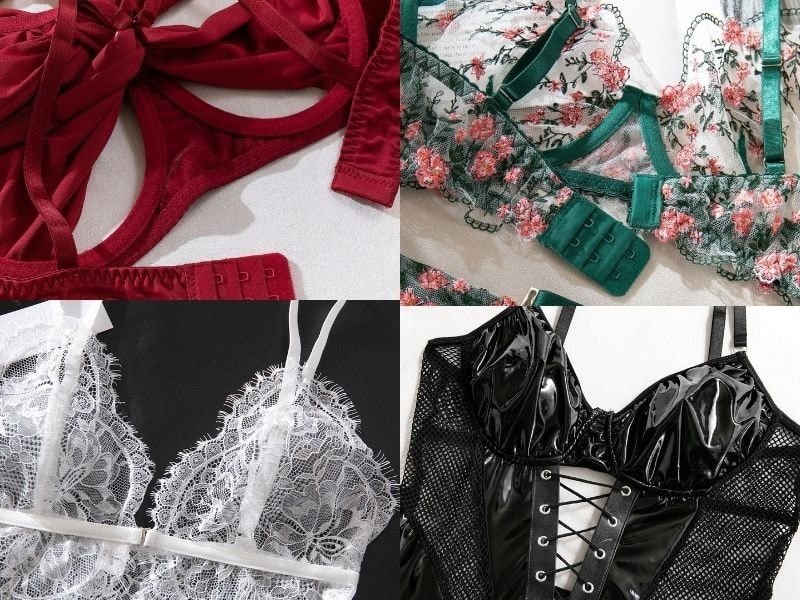
In sexy lingerie development, fabric is not just a design detail. It directly affects how a product looks, feels, fits, and sells. For brands, wholesalers, and sourcing teams, fabric choice influences visual style, comfort, product positioning, and overall commercial value.

This matters even more in sexy lingerie, where appearance and body feel are closely connected. The same design can create a completely different result when made in lace, mesh, satin, or other materials. For B2B buyers, understanding fabric is essential to making better product, sourcing, and assortment decisions.
This article looks at the most common fabrics used in sexy lingerie and explains how they affect style, fit, and commercial value.
What Are the Most Common Fabrics Used in Sexy Lingerie?
Sexy lingerie uses many fabrics, but a few appear repeatedly because they support the category’s core visual and commercial needs. The most common fabrics include lace, mesh and tulle, satin, velvet, faux leather or leather-look materials, and silk.
Each of these materials creates a different visual mood and commercial effect. Lace is often associated with femininity and romantic styling. Mesh and tulle bring transparency, layering, and a lighter visual effect. Satin creates smoothness and shine, while velvet adds depth and texture. Faux leather gives a stronger and more directional look, and silk is often linked to softness, elegance, and premium positioning.

The key point is that these fabrics do not play the same role. Some are suitable for broad commercial programs, while others are better used in selective or higher-end collections. That is why fabric should be treated as a strategic decision, not only a styling choice.
| Fabric | Main Visual Effect | Typical Commercial Use |
|---|---|---|
| Lace | Feminine, romantic, decorative | Broad commercial use, core sexy lingerie styles |
| Mesh / Tulle | Sheer, light, modern | Fashion-led, layered, visually strong styles |
| Satin | Smooth, polished, elegant | Gift-oriented, refined, premium-looking styles |
| Velvet | Rich, textured, dramatic | Seasonal, statement, selective collections |
| Faux leather | Bold, edgy, directional | Niche, darker boudoir, statement products |
| Silk | Soft, luxurious, refined | Premium and high-end positioning |
Why Buyers Need to Understand Sexy Lingerie Fabrics
For buyers, fabric knowledge is product knowledge. A buyer who understands fabric can make better decisions on assortment planning, price positioning, supplier selection, and market fit.
In sexy lingerie, fabric affects product quality in very visible ways. It changes how the product drapes, how it feels on the body, how much stretch or support it offers, and how premium it appears. This means a good-looking style can still become a weak commercial product if the chosen fabric does not match the intended price point, target customer, or product function.
Fabric understanding also helps buyers ask better questions during sourcing. Instead of evaluating a style only by appearance, buyers can assess whether the lace feels soft enough, whether the mesh has the right balance of transparency and support, whether the satin looks polished rather than cheap, or whether a more niche fabric such as faux leather will really suit the target market.

For wholesalers and brand sourcing teams, this matters even more because fabric affects repeatability and sales potential. Some fabrics are easier to sell across different markets and channels. Others may be visually attractive but too narrow for broader commercial programs. Buyers who understand this difference are more likely to build assortments that are both appealing and commercially workable.
How Sexy Lingerie Fabrics Influence Visual Style
Fabric has a direct effect on the visual identity of sexy lingerie. It shapes the mood of the product and influences how the final style is perceived.
Lace usually creates a softer, more romantic, and more feminine effect. It is often associated with classic sexy lingerie, bridal-inspired collections, and elegant gift-oriented products. Depending on the pattern and density, lace can range from commercial and approachable to more refined and premium.
Mesh and tulle create a different visual direction. They usually feel lighter, more transparent, and more modern. These fabrics are often used to create layering, sheerness, and a more daring appearance. In many cases, they help a product look more contemporary and visually direct, especially when used in bodysuits, teddies, or more fashion-led pieces.
Satin brings smoothness and shine. It can make a product feel more polished, elegant, and luxurious. Satin is often used when a brand wants a cleaner, more fluid, and more giftable look.
Velvet changes the mood more dramatically. It introduces texture, depth, and a stronger visual richness. Because of this, velvet often works better in more selective collections rather than broad commercial assortments.
Faux leather and leather-look materials shift the style into a stronger and more directional space. These fabrics usually create a darker, bolder, and more niche aesthetic. Silk, by contrast, creates a softer luxury impression. Compared with satin, it often gives a more natural and understated premium look.

A simple way to think about it is this:
- Lace supports romance and femininity
- Mesh / tulle support sheerness and modern sensuality
- Satin supports elegance and polish
- Velvet supports richness and drama
- Faux leather supports bold, niche styling
- Silk supports softness and luxury
In sexy lingerie, fabric is one of the main reasons why one product feels romantic, another elegant, and another bold or dramatic.
How Sexy Lingerie Fabrics Affect Fit, Comfort, and Shape
Fabric also changes how a product fits and feels. The same design can behave very differently depending on the chosen material.
Some fabrics are softer and more body-friendly, while others are heavier, stiffer, or more visually structured. This changes body feel, stretch behavior, support level, drape, contour effect, and overall wearability.

For example, a lace teddy may feel softer and more romantic, but may also need additional support depending on the construction. A mesh bodysuit may create a close and light body effect, but comfort depends heavily on stretch and recovery. A satin chemise may look polished and elegant, but may not offer the same flexibility as stretch-based fabrics. A faux leather piece may create strong style impact, but often offers lower softness and less natural body comfort.
This is why fabric selection cannot be separated from fit review. A buyer or product developer should never assume that a silhouette proven in one fabric will perform identically in another. In sexy lingerie, fabric and fit are closely linked.
Why Different Fabrics Change Product Positioning and Price Level
Fabric choice affects much more than product cost. It also changes perceived value, target customer fit, category role, and pricing potential.
Some fabrics are easier to use in broad commercial programs because they offer wide acceptance and strong category relevance. Others are better suited to premium or niche positioning. Lace, for example, is often commercially flexible because it can work across multiple product types and price levels. Satin may support a slightly more polished and gift-oriented positioning. Velvet, faux leather, and silk usually push the product toward more selective positioning.

From a B2B perspective, fabric influences price level in several ways:
- raw material cost
- visual value perception
- handling complexity
- suitability for mass production
- expected customer response
This means buyers should always ask whether a fabric supports the intended market position. A premium fabric in the wrong channel may reduce sales efficiency. A lower-cost fabric in a premium concept may weaken brand presentation. The most effective fabric choice is the one that aligns with both the intended image and the target price architecture.
| Fabric | Typical Positioning | Price Impact |
|---|---|---|
| Lace | Broad commercial to premium | Flexible, depending on pattern and quality |
| Mesh / Tulle | Commercial to fashion-led | Moderate, depending on use and complexity |
| Satin | Mid-range to premium-looking | Often supports higher perceived value |
| Velvet | Selective, richer positioning | Can raise perceived premium level |
| Faux leather | Niche, statement-driven | More selective, not always broad-market |
| Silk | Premium to luxury | Higher material and handling cost |
How Brands and Wholesalers Should Choose Sexy Lingerie Fabrics
Brands and wholesalers should select fabrics based on a combination of target customer, product role, style direction, and commercial practicality.
For brands, fabric choice should support the desired identity of the collection. A brand targeting romantic and feminine customers may rely more on lace and tulle. A brand positioned around elevated elegance may prefer satin or selected silk-based styles. A more directional brand may introduce velvet or faux leather in controlled proportions to build a more distinct visual character.
For wholesalers, fabric selection often needs to be more commercially disciplined. Products should not only look attractive but also suit broader market demand and repeat sales potential. This usually means prioritizing fabrics with more stable acceptance, clearer value perception, and fewer fit or handling complications.

In practice, buyers should balance two types of fabrics:
- commercially stable fabrics for core volume styles
- image-enhancing fabrics for hero or statement products
The strongest assortments usually combine both, rather than relying too heavily on either one.
Common Fabric Selection Mistakes in Sexy Lingerie Development
Many sourcing and development problems come from fabric mistakes rather than design mistakes.
One common mistake is choosing fabric only for appearance. A material may look beautiful in a swatch or mood board but still be the wrong choice if it does not support comfort, fit, or commercial practicality.
Another mistake is ignoring wearability. Sexy lingerie is a visual category, but it still needs to feel acceptable to the consumer. If a fabric feels too rough, too stiff, too heavy, or too unstable, the product may struggle even if it looks strong in presentation.
Some buyers also select fabrics that do not match the target price level. A material may be too expensive for the planned retail structure, or too visually weak for a premium concept. Overusing niche fabrics is another common issue. Velvet, faux leather, and silk can all be valuable in the right context, but they should not automatically dominate broader commercial programs.

Before approving a fabric, buyers should ask:
- Does this fabric fit the target customer?
- Does it support the intended price point?
- Is it suitable for repeat production?
- Does it improve both style and wearability?
- Is it right for this product type?
Those questions often prevent costly mistakes later.
Conclusion
In sexy lingerie, fabric is not only a styling choice. It is also a commercial decision that affects product appearance, fit, comfort, positioning, and price level.
For buyers, wholesalers, and brands, understanding how different fabrics perform helps create stronger products and more commercially relevant collections. The right fabric does more than improve the look of a style. It also improves how well that style fits the market.
FAQ
Q1: What are the most common fabrics used in sexy lingerie?
The most common fabrics used in sexy lingerie include lace, mesh or tulle, satin, velvet, faux leather or leather-look materials, and silk. Each fabric creates a different visual effect and supports a different product mood, fit experience, and commercial positioning.
Q2: Is velvet suitable for all sexy lingerie collections?
Not always. Velvet creates a richer, heavier, and more dramatic look, which can be very effective in selective or seasonal collections. However, it may be too niche or too visually strong for broader commercial programs, depending on the target market.
Q3: Which sexy lingerie fabrics are more commercially versatile?
Lace, mesh, tulle, and satin are generally more commercially versatile because they are easier to position across a wider range of products and markets. Velvet, faux leather, and silk are often more selective and should usually be used more strategically.
Q4: Why is fabric selection a commercial decision, not just a design decision?
Fabric selection is a commercial decision because it affects how the product is positioned, how much it can sell for, how it performs in the market, and whether it fits the intended customer and sales channel. In sexy lingerie, the right fabric supports both style and business performance.
Looking for a Sexy Lingerie Manufacturer That Understands Fabric and Commercial Fit?
From lace and mesh to satin, velvet, and faux leather, XieSheng helps b2b buyers develop sexy lingerie styles with the right balance of visual appeal, comfort, and commercial value. Contact us to discuss your wholesale, private label, or OEM/ODM project.