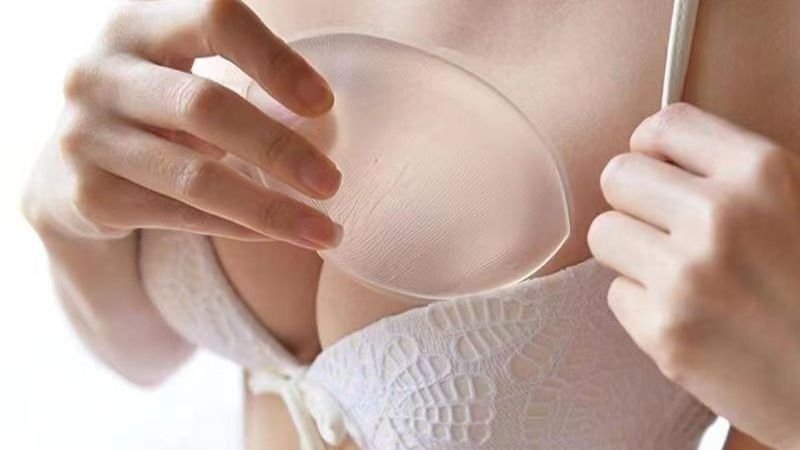
Chicken cutlet bras are often treated as a simple lingerie accessory, but products that look almost identical can perform very differently once worn. Material, density, weight, thickness, edge design and adhesive structure can all affect comfort, stability and the final enhancement effect.
They are also frequently misunderstood as silicone-only products. In reality, chicken cutlet bra inserts can be made from silicone, fabric-covered foam, gel-filled materials or other composite structures. The same base material can also be developed as a loose insert, an anti-slip pad or an adhesive version.

For consumers, the main questions are usually how natural the insert feels and how much volume or lift it provides. For lingerie brands and buyers, durability, production consistency, fixing method, wash performance and stability during actual wear are equally important.
This article explains what chicken cutlet bras are, how different materials and fixing methods perform, how they create lift and volume, and what brands and buyers should consider when choosing breast enhancer inserts.
What Are Chicken Cutlet Bras?
A chicken cutlet bra usually refers to a removable breast enhancer insert used with a bra, swimsuit or other compatible garment. Its main purpose is to add volume, improve shape, create lift or fill specific areas of the cup without permanently building extra padding into the garment.

The nickname comes from the curved, flattened appearance of many breast enhancer inserts, which resembles the shape of a chicken cutlet. Although silicone versions are widely associated with the term, modern chicken cutlet inserts are available in several different material structures.
Chicken cutlet bras are therefore not necessarily complete bras, and they are not always made of silicone. Depending on the design, an insert may sit loosely inside the cup, fit into a pad pocket, use an anti-slip surface, attach to the inside of a bra or swimsuit, or use an adhesive layer for direct skin contact.
Some fabric-covered foam inserts can also be developed with adhesive surfaces. Depending on the product design, the adhesive may help secure the insert to the garment, to the body, or on both sides to improve positioning between the wearer and the garment.
The History and Origin of Chicken Cutlet Bras
Breast padding existed long before the expression “chicken cutlet” became common. Removable pads, padded cups and other shaping components have long been used to increase apparent breast volume or improve the fit and silhouette of clothing.
The informal nickname developed because many soft breast enhancers have a rounded, flattened profile that visually resembles a cutlet. As strapless dresses, swimwear, eveningwear and fashion lingerie became more varied, removable enhancers offered a practical way to adjust shape without permanently changing the bra.
Today, the category goes far beyond the traditional heavy silicone insert. Brands can develop different combinations of material, density, adhesive structure, thickness and shape depending on whether the priority is realistic weight, lightweight comfort, strong cleavage or subtle cup filling.
Main Materials Used in Chicken Cutlet Bra Inserts
Material is one of the most important factors when comparing breast enhancer inserts because it affects more than hand feel. It also influences weight, softness, recovery, durability and long-term stability.
However, material and fixing method should not be treated as the same classification. A fabric-covered foam insert, for example, can be loose, pocketed, anti-slip or adhesive while still using the same basic foam-and-fabric construction.
In actual product development, two inserts with almost identical external dimensions can behave very differently once handled or worn. This is why buyers need to evaluate both the internal material structure and the way the insert is secured.
Silicone Inserts
Silicone is one of the most recognizable materials used for chicken cutlet breast enhancers because it can create a soft, substantial feel that is closer to natural body tissue than conventional lightweight foam.

This makes silicone attractive for products where realistic touch and visible volume are important. It is commonly considered for bridalwear, evening dresses, swimwear and other occasion-based products where a fuller appearance is required.
The weight of silicone can contribute to a more realistic feel, but it can also become a disadvantage if the insert is too heavy for the bra structure or intended wearing time. Material density therefore matters just as much as softness.
In our product development work, we compared silicone inserts with almost identical external shapes and found weight differences of around 30% depending on silicone density. The visual appearance alone would not have revealed this difference.
We have also seen lower-cost silicone develop surface oil migration. Once this happens, the insert may feel oily and can potentially transfer residue to the outer covering, garment or packaging.
For this reason, silicone inserts should not be compared only by shape and unit price. Weight, density, hand feel, surface stability and aging performance should all be considered before bulk production.
Fabric-Covered Foam Inserts
Fabric-covered foam is generally much lighter than silicone and is especially suitable for products where comfort, flexibility and practical wear are more important than realistic body-like weight.

The basic construction usually combines a molded or cut foam core with a textile outer layer. Manufacturers can adjust foam density, thickness, firmness and shape to achieve anything from subtle cup filling to more noticeable push-up enhancement.
A key point is that fabric-covered foam does not automatically mean a loose, non-adhesive insert. The same basic material structure can be developed in different fixing formats.
Some fabric-covered foam pads are simply placed inside the bra cup or inserted into a pad pocket. Others use an anti-slip surface, while adhesive versions can be designed to attach to the bra, swimsuit or body depending on the product construction.
There are also fabric-covered foam inserts with adhesive surfaces on both sides. These designs can help secure the enhancer between the body and the garment, although the exact adhesive layout should be developed according to the intended use and skin-contact requirement.
Foam density is especially important because softer material does not automatically mean better comfort or durability. During one product development project, a thin foam insert looked acceptable during initial fitting, but the low-density foam compressed too easily.
After repeated washing and pressure, the pad gradually lost part of its original thickness. For the final product, we moved toward a higher-density molded foam with better shape retention while maintaining acceptable softness.
The best foam is therefore not simply the firmest option available. Buyers should balance density, softness, compression recovery, wash durability and adhesive requirements according to the intended garment.
Gel or Composite Inserts
Gel and composite breast inserts cover a broader range of constructions and should not automatically be treated as another type of silicone. A composite insert may use a soft internal filling together with fabric, laminated films or other bonded outer layers.

These constructions can sometimes provide a softer hand feel while remaining lighter than some traditional silicone inserts. They may appeal to brands looking for a product positioned between lightweight foam and heavier realistic-feel enhancers.
The main challenge is that composite construction introduces another important variable: bonding stability. The quality of the filling alone does not determine whether the finished product will remain stable.
In one of our development projects, a customer initially preferred the feel of a composite gel insert, but two sample rounds developed edge delamination. The outer layers began separating around the perimeter after handling.
Because of this repeated issue, we eventually changed the product back to a fabric-covered foam construction. Continuing with the original composite structure would have created too much production and after-sales risk.
For composite inserts, bonding quality can be just as important as the filling material itself. Edge sealing, lamination consistency and storage stability should all be evaluated before bulk approval.
Material Structure and Fixing Method Are Two Different Things
One of the most useful ways to understand breast enhancer inserts is to separate what the product is made from from how it stays in position.
A silicone insert can be loose or adhesive. A fabric-covered foam insert can also be loose, pocketed, anti-slip or adhesive. Composite inserts can likewise be developed with different positioning systems depending on the garment.
In practical product development, these are two separate decisions:
- Material structure: silicone, fabric-covered foam, gel-filled and other composite constructions.
- Fixing method: loose placement, pocketed construction, anti-slip surfaces, garment adhesion and skin adhesion.
- Some adhesive products use one adhesive surface, while others may use adhesive on both sides depending on how the insert sits between the body and garment.
Separating these two decisions prevents a common sourcing mistake: assuming that a certain material always comes with a certain fixing method.
How Do Chicken Cutlet Bras Work?
Chicken cutlet inserts work by changing how breast tissue sits inside the bra cup or garment. Depending on shape and placement, they can increase fullness, create lift, push the breasts inward or fill empty cup areas.
The final effect comes from several variables working together. Thickness matters, but firmness, geometry, edge transition, placement and fixing method can influence the result just as much.

Adding Volume
The simplest function of a breast enhancer insert is to occupy additional space inside the cup. A relatively thin insert can create subtle fullness, while a thicker one can produce a more visible increase in apparent breast volume.
However, increasing thickness across the entire insert can make the product bulky. A better design usually concentrates volume where enhancement is needed and becomes thinner toward the edge.
This creates a smoother transition between the body, insert and bra cup while reducing the risk of a visible line underneath clothing.
Creating Lift
Placement determines the direction in which breast tissue is moved. A pad positioned mainly underneath the breast can provide upward lift, while additional volume toward the outer side can push breast tissue inward.
Asymmetrical inserts often combine these effects by concentrating more thickness in the lower outer section. This moves the breast upward and inward rather than simply adding volume forward.
This is why two inserts with the same maximum thickness can create very different results. Geometry and placement often matter as much as total thickness.
Improving Shape
Breast enhancer inserts can be developed in teardrop, oval, triangular, crescent and asymmetrical profiles. Each shape distributes volume differently and should be selected according to the desired result and cup construction.
A teardrop shape can provide gradual lower-bust fullness, while a side-focused insert may create stronger inward push. More symmetrical pads can help fill cup space evenly.
Inserts can also help visually balance slight breast asymmetry by using different thicknesses or placements on each side. The correct insert should follow the final garment rather than simply copying a standard shape.
Push-Up Pads and Chicken Cutlet Inserts: What Is the Difference?
Push-up pads and chicken cutlet inserts overlap, but they are not exactly the same concept. “Push-up pad” mainly describes function. A push-up pad is designed to move the breast upward, inward or both, and it may be sewn into a bra or designed as a removable insert.

“Chicken cutlet,” by contrast, is an informal term commonly used for removable breast enhancer inserts. Depending on their shape and placement, chicken cutlet inserts may provide push-up, general volume, cup filling or visual correction for slight asymmetry.
This distinction matters because not every chicken cutlet insert needs to create a strong push-up effect. Some thin foam or silicone inserts are designed mainly to add fullness or fill empty cup space.
For buyers, the most useful question is therefore not whether the product should be called a push-up pad or a chicken cutlet. It is what visual effect, fixing method and garment compatibility the insert needs to achieve.
Why Fit and Edge Design Matter
A breast enhancer insert may look excellent when placed flat on a table but perform poorly during actual movement. Static appearance alone is not enough to judge real wearing performance.
Walking, lifting the arms, sitting and bending all change the pressure inside the cup. These movements can reveal shifting, visible edges or cup distortion that would never appear during static inspection.
Why Inserts Move During Wear
An insert can shift because it is too soft, too heavy or too smooth. Movement can also occur when the shape of the insert does not match the cup or when the cup itself provides too much empty space.
Surface friction plays an important role as well. A smooth non-adhesive insert may slide more easily against smooth bra fabric, while textured or anti-slip surfaces can improve stability.
Adhesive construction offers another approach. An insert may attach to the garment, to the skin or, in some designs, use adhesive surfaces on both sides to help hold its position between the wearer and the bra or swimsuit.
The complete system therefore needs to be considered together. Insert weight, firmness, cup construction, surface treatment and adhesive design all influence stability.
Why Insert Edges Become Visible
Visible edges are particularly noticeable underneath thin bras and close-fitting clothing. A thick perimeter is the most obvious cause, but inadequate tapering and excessive firmness can also create a visible line.
The edge should transition gradually from the thicker enhancement area toward the body. A thin or feathered edge reduces visible lines under clothing.
The outer covering also matters. If the filling and fabric layer respond differently to stretch, the edge may become more visible when the bra or garment is placed under tension.
Factory Experience: From Static Sample to Dynamic Fit
We experienced this issue during the development of a thin composite gel insert. When the first sample was inspected on the table, the profile looked smooth and thin enough to remain discreet underneath clothing.
The problem appeared only during actual fitting. After the wearer walked and raised her arms, the insert shifted and the outer edge became more visible through the garment.
We adjusted the structure by tapering the edge more gradually, adding a dotted anti-slip texture and making the internal filling slightly firmer. These changes improved both stability and edge visibility.
A good-looking sample on a table does not necessarily perform well on the body. Dynamic fitting tests are essential for breast enhancer inserts.
Who Should Use Chicken Cutlet Breast Enhancers?
Chicken cutlet inserts are optional shaping accessories rather than products that every bra wearer needs. Their main value is giving the wearer temporary control over volume, lift and silhouette.
They can be useful for smaller-bust wearers looking for additional fullness, customers who want more cleavage, or people who want to visually balance slight breast asymmetry.
They can also work with strapless dresses, bridalwear, swimwear and everyday bras, provided that the insert material, fixing method and cup construction match the application.

Chicken Cutlets for Dresses and Occasionwear
Evening dresses and bridal garments often use necklines or shoulder constructions that do not work well with conventional heavily padded bras. A removable breast enhancer gives the wearer more control over where additional volume is placed.
For fitted clothing, edge visibility becomes especially important. Thin tapered inserts usually perform better under close-fitting garments.
Depending on the dress construction, adhesive attachment may also be useful. Some inserts can be fixed to the garment or body rather than simply sitting loose inside the cup area.
Chicken Cutlets for Swimwear
Removable inserts are also used in swimwear to provide optional enhancement. They allow consumers to use the same swimsuit with or without additional volume.
The material needs to match the swimming application. Buyers should consider water exposure, wet weight, drying performance and positioning stability inside the swimsuit.
Fixing method also matters. Some swimwear uses pad pockets, while other designs may use anti-slip or adhesive inserts depending on the structure of the cup and garment.
Chicken Cutlets for Everyday Lingerie
Everyday products usually prioritize low weight, comfort and practical washing. For this reason, molded foam is often a more suitable starting point than heavy silicone for long wearing periods.
Fabric-covered foam also offers more construction flexibility than many buyers initially expect. It can be used as a loose insert, placed inside a pad pocket or developed with adhesive surfaces for additional positioning control.
For repeated everyday use, buyers should pay close attention to foam recovery, wash performance, adhesive durability where applicable and edge stability.
Key Benefits of Chicken Cutlet Bra Inserts
The main advantage of removable breast enhancers is flexibility. Instead of building the same push-up level permanently into every bra, the wearer can adjust the amount and location of enhancement according to the garment.
A single product category can also cover different functions. Some inserts provide subtle volume, others create directional lift, and others mainly fill cup space or help balance slight asymmetry.
For lingerie brands, breast enhancer inserts can extend an existing collection without requiring a completely new bra structure. Different materials, enhancement levels and fixing methods can be developed around compatible bras, swimwear or occasionwear.
Common Issues and Limitations
Breast enhancer inserts involve trade-offs, and no material or fixing method performs best in every situation. A construction that solves one problem may introduce another.
Silicone can provide a realistic feel but may become heavy. Foam can be lighter and easier to integrate into garments but may lose thickness if density is too low.
Adhesive versions may improve positioning but introduce additional requirements around bonding, skin contact, residue and repeated use. Composite inserts may offer attractive softness but create lamination risks.
Weight
Silicone is valued partly because its weight can contribute to a realistic feel. However, excessive weight may reduce comfort if the insert is large or the bra does not provide enough support.
A heavier insert may also move more easily inside a loose cup. Realistic feel should always be balanced against stability.
For bulk sourcing, actual piece weight is therefore more useful than simply requesting “soft silicone.”
Shifting During Wear
Loose inserts may move when their surface is smooth or when the bra cup does not hold them firmly. Shape, weight, cup fit and surface friction all influence stability.
Garment structure also matters. A structured molded cup may hold an insert more securely than a soft, unstructured bralette.
Where movement is a concern, anti-slip texture, a pad pocket or adhesive structure may be more effective than relying on friction alone.
Visible Edges
Thin clothing can reveal construction details that remain hidden under heavier fabrics. If the insert perimeter is too thick, the edge may show through the bra or dress.
A gradual tapered edge is particularly important for body-hugging clothing. The transition should be evaluated inside the actual garment rather than judged only from the insert lying flat.
Even a generally thin pad can create a visible line if the thickness decreases too abruptly near the perimeter.

Foam Compression
Foam is exposed to repeated pressure during wear and washing. Lower-density material may gradually lose thickness or shape if recovery is insufficient.
For products intended for frequent use, compression recovery can be more important than initial softness. A slightly firmer foam may provide more consistent performance over time.
Wash testing is especially useful for removable pads that are expected to stay inside the garment during laundering.
Silicone Oil Migration
Some lower-cost silicone constructions can develop surface oil migration during storage. This may make the insert feel oily and potentially affect the outer layer, garment or packaging.
The issue may not appear immediately after production. Storage observation can therefore be useful when long-term silicone stability is a concern.
For reusable products, surface stability should be considered during material approval rather than only after consumer complaints occur.
Composite Insert Delamination
Composite gel inserts depend on the strength of the bond between different layers. If lamination or edge sealing is unstable, separation may begin around the perimeter.
This type of defect may only appear after repeated handling, storage or bending. A clean first sample does not always predict long-term performance.
For composite structures, bonding stability should therefore be considered together with softness and appearance.
Adhesive Performance
Adhesive construction should be evaluated separately from the base insert material. A fabric-covered foam pad can be adhesive just as a silicone or composite insert can.
The adhesive may be designed to attach to the garment, directly to the skin or, in some constructions, on both sides to help secure the insert between the wearer and garment.
Buyers need to consider tack, residue, storage stability and repeated-use performance according to the exact adhesive system. Skin-contact adhesives also need appropriate attention to comfort and intended use.
How to Choose the Right Chicken Cutlet Bra Inserts
The best insert depends on the wearing scenario rather than the material name alone. A realistic-feel insert for eveningwear and a lightweight everyday enhancer may require completely different constructions.
A practical starting point is to match both the material and fixing method to the intended application:
- Silicone may suit products where realistic weight and soft body-like feel are priorities, while fabric-covered foam is often more practical for lightweight everyday use.
- Gel or composite constructions can offer another balance of softness and weight, but bonding stability needs closer evaluation.
- Loose, pocketed, anti-slip, garment-adhered and skin-adhered inserts each solve different positioning needs, and some fabric-covered foam versions can also use adhesive on both sides.
These are starting directions rather than fixed rules. Final performance still depends on the cup, garment, enhancement level and actual wearing conditions.
Choose by Enhancement Level
Light enhancement usually requires only a small amount of additional volume and is often used to fill cup space. Medium enhancement creates more obvious fullness without dramatically changing the silhouette.
Strong push-up effects usually require more strategic thickness distribution. Extra volume may be concentrated at the bottom or outer side rather than spread evenly across the entire insert.
For product development, defining the desired visual result is more useful than requesting only a specific maximum thickness.
Choose by Material Performance
Material selection should follow the final product requirement. Silicone buyers need to consider weight, density and surface stability, while foam buyers should focus on compression recovery, softness and wash performance.
Composite structures introduce additional considerations such as bonding strength. Adhesive versions add another layer of testing that should be considered separately from the internal material.
A softer or more expensive material is not automatically better if it does not match the actual product application.
Choose by Edge Construction
A thick-edged insert may work well inside a structured padded bra because the cup itself hides the transition. The same insert may become highly visible under a thin seamless bra or fitted dress.
For low-visibility applications, the pad should become progressively thinner toward the perimeter. This helps create a smoother transition between the enhanced area and the natural body contour.
Edge construction should therefore be treated as a functional specification rather than a cosmetic detail.

Choose by Fixing Method
Loose inserts are simple and flexible but depend heavily on cup fit. Pocketed pads remain more securely positioned because the garment itself restricts movement.
Anti-slip textures increase friction without using adhesive. Garment-adhered inserts attach to the inside of a bra or swimsuit, while skin-adhered versions rely on direct contact with the wearer.
Some fabric-covered foam constructions can also use adhesive on both sides. These designs should be developed around the final garment because adhesive strength, placement and surface compatibility all affect performance.
Chicken Cutlet Inserts vs. Other Breast Enhancement Products
Chicken cutlet inserts are often confused with sticky bras, push-up pads, nipple covers and breast forms because these products can appear in the same lingerie accessory category.
The difference becomes clearer when the main function and construction of each product are considered.
Chicken Cutlet Inserts vs. Sticky Bras
A chicken cutlet insert generally functions as an enhancement component. It is usually used together with a bra, swimsuit, dress or other compatible garment.
A sticky bra functions as the bra itself. It normally includes cup structures and adhesive surfaces that allow it to be worn without conventional shoulder straps or a back band.
Some adhesive breast enhancers sit between these two categories, especially when they can attach to both the body and garment. The actual construction should therefore be checked rather than relying only on the product name.
Chicken Cutlet Inserts vs. Push-Up Bra Pads
Push-up pads mainly describe a shaping function. They are designed to move breast tissue upward, inward or both.
They may be sewn directly into a bra or used as removable inserts. Chicken cutlets, by contrast, are more commonly used as an informal name for standalone removable breast enhancer inserts.
The two categories overlap, but chicken cutlet inserts do not always need to create strong push-up. They may also add general volume, fill cup space or help balance slight asymmetry.
Chicken Cutlet Inserts vs. Nipple Covers
Nipple covers primarily provide nipple coverage and help reduce visibility underneath clothing. They are generally designed to remain thin and discreet.
Chicken cutlet inserts serve a different purpose because they add physical volume and can create lift, cleavage or shape adjustment.
Brands sourcing both categories should therefore treat coverage and breast enhancement as separate product-development requirements.
Chicken Cutlet Inserts vs. Breast Forms
Breast forms are a more specialized category and generally provide substantially more breast shape or volume than ordinary fashion enhancers.
They may be used for post-surgery needs, specialized fitting, costume applications or other situations requiring a more complete breast shape.
Chicken cutlet inserts are usually smaller fashion accessories designed to enhance or redistribute existing breast volume rather than function as full breast forms.
How Different Lingerie Businesses Can Sell Chicken Cutlet Inserts
Chicken cutlet inserts can fit several lingerie and apparel business models because the category can be adjusted across materials, enhancement levels and fixing methods.
For lingerie brands, removable enhancers can be offered with compatible bras or sold separately as accessories. This allows the brand to provide different levels of volume or lift without permanently redesigning the cup.
Swimwear brands can use pocketed, anti-slip or adhesive inserts depending on the swimsuit structure. Bridal and occasionwear retailers can offer thinner or stronger enhancers to support different dress silhouettes.
E-commerce brands can use clear fitting demonstrations to show differences in volume, positioning and edge visibility. Wholesalers and distributors can build ranges around material, enhancement level and fixing method rather than simply offering many visually similar styles.

What B2B Buyers Should Check Before Ordering
For bulk sourcing, breast enhancer inserts should not be approved only by appearance, color or sample price. A reliable product specification needs to define the characteristics that directly influence performance and production repeatability.
Before confirming a bulk order, buyers should normally review:
- Material structure, foam or silicone density, piece weight, thickness distribution, shape, symmetry and edge construction.
- Fixing method, adhesive location, anti-slip treatment, wash performance, compression recovery, bonding stability and dynamic fit.
- Packaging, protective films, labeling, private-label requirements and any instructions required for the final market.
The exact testing focus should depend on the selected construction. Foam products require stronger attention to compression, composite structures require bonding checks, and adhesive products need additional evaluation of tack and stability.
Material Specifications
The material specification should clearly describe what the insert is made from. Foam inserts should define the core foam and outer fabric, while silicone inserts should control more than just dimensions.
Composite inserts should identify the main filling and bonded layers. Adhesive structure should be specified separately because it is not the same thing as the base material.
This distinction helps factories reproduce the approved sample more consistently during bulk production.
Weight and Thickness
Piece weight should be checked because excessive variation between left and right inserts can affect both feel and appearance.
Thickness should also be measured at meaningful points rather than only at the center. A tapered insert may have a thick enhancement zone while still requiring an extremely thin edge.
Controlling thickness distribution helps maintain the intended enhancement effect while reducing visible lines.
Shape and Edge Construction
Overall dimensions, symmetry and cup compatibility should be confirmed during sampling. Even small changes in shape can alter how the insert sits inside the garment.
The transition from the thickest area toward the perimeter deserves particular attention. Poor tapering can make a pad appear bulky even when overall thickness is not excessive.
When invisibility is an important product claim, edge performance should be checked during actual fitting.
Surface and Fixing Treatment
Surface construction should match the garment and wearing scenario. A smooth loose insert may feel comfortable but can move more easily inside a smooth cup.
Textured or dotted surfaces can increase friction, while adhesive can be used to attach the insert to the garment, body or both depending on the design.
The fixing method should be confirmed together with cup fabric, garment structure and expected activity level.
Durability Testing
Testing should focus on the most relevant failure risk for each construction. Foam may require wash and compression-recovery evaluation, while composite products need attention to bonding and delamination.
Silicone versions may require storage observation for surface stability. Adhesive constructions require additional checks for tack, residue and performance after storage or repeated use.
The goal is not to perform every possible test on every product, but to identify the most likely failure mode before bulk production.
Dynamic Fitting Test
Dynamic fitting is one of the most valuable steps before final approval. A fit model should not only stand still in front of a mirror.
Walking, sitting, bending and raising the arms can reveal shifting, edge visibility or cup distortion that cannot be identified from a flat sample.
For adhesive versions, dynamic fitting also helps determine whether the fixing system remains stable without creating unnecessary pulling or discomfort.
Packaging and Private Label Requirements
Packaging needs to protect the insert shape and, where relevant, adhesive surfaces. Different constructions may require formed trays, protective films, individual bags or retail boxes.
Adhesive products require particular attention because protective films and storage surfaces can directly affect functional performance.
Private-label buyers should also confirm branding, instructions, barcode placement and material information before production begins.
Customization Options for Breast Enhancer Inserts
Private-label customization can go far beyond changing the logo or packaging. Material, density, dimensions, shape, thickness, enhancement level, edge taper, outer fabric and surface treatment can all be developed according to the final product.
The fixing system can also be customized. A brand may choose a loose insert, pocketed pad, anti-slip construction, garment adhesive, skin adhesive or a two-sided adhesive structure depending on how the product is intended to be worn.
The most effective development process begins with the wearing scenario rather than an isolated reference photo. A seamless bra, swimsuit and bridal dress may all require different solutions even if the inserts look similar.
For OEM and ODM projects, defining the desired fit, visual effect, fixing method and final garment before sampling usually produces better results than simply copying the outline of an existing chicken cutlet insert.

FAQ
Q1: Are Chicken Cutlet Bras Always Made of Silicone?
No. Silicone is only one material used for chicken cutlet breast enhancers. Modern inserts can also use fabric-covered foam, molded foam, gel fillings and composite structures.
Fabric-covered foam inserts may also be non-adhesive or adhesive, so material and fixing method should be evaluated separately.
Q2: Can Chicken Cutlets Be Worn Inside Any Bra?
Not necessarily. The bra needs enough cup space to accommodate the insert without creating overflow, distortion or excessive pressure.
The insert shape and fixing method should also match the cup. Some products sit loosely inside the bra, while others use pad pockets, anti-slip surfaces or adhesive attachment.
Q3: Can Chicken Cutlet Inserts Be Attached to Bras or Swimwear?
Yes. Some inserts are specifically designed to attach to the inside of a bra or swimsuit rather than simply sitting loose inside the cup.
This can include fabric-covered foam inserts with adhesive surfaces. Other versions may attach directly to the skin or use adhesive on both sides depending on the intended construction.
Q4: Do Chicken Cutlet Inserts Move While Wearing?
They can. Movement depends on insert weight, firmness, surface friction, cup fit and fixing method.
Anti-slip surfaces, pad pockets, garment adhesion and better cup matching can all improve stability.
Q5: Which Is Better: Silicone or Foam Breast Inserts?
Neither is universally better. Silicone generally provides more realistic weight and a softer body-like feel, while fabric-covered foam is lighter and offers greater construction flexibility.
The best choice depends on the final garment, wearing time, enhancement level, fixing method and durability requirements.
Q6: Can Chicken Cutlet Bra Inserts Be Customized for Private Label?
Yes. Private-label inserts can be customized in material, density, shape, dimensions, thickness, edge profile, surface treatment and packaging.
The fixing method can also be customized, including loose, pocketed, anti-slip, garment-adhered, skin-adhered and certain two-sided adhesive constructions.
Conclusion
The right chicken cutlet insert is not simply the thickest, softest or cheapest option. Material, weight, edge design, fixing method, stability and intended wearing scenario all affect how the product performs once it is actually worn.
Silicone can provide a more substantial and realistic feel, while fabric-covered foam is often more practical for lightweight applications and can also be developed in loose, anti-slip or adhesive versions. Composite structures offer another balance of softness and weight, but bonding stability requires closer attention.
For brands and buyers, the most effective next step is to define the desired enhancement result and final garment first. Material structure and fixing method can then be selected separately around the real application rather than assumed from the product name.
Develop Breast Enhancer Inserts for Your Lingerie Collection
XS Lingerie supports OEM and ODM development for lingerie brands, retailers and distributors, including bras, swimwear, invisible lingerie accessories and breast enhancer inserts.
Breast enhancer inserts can be developed around the target material, foam or silicone density, shape, thickness, enhancement level, edge profile, anti-slip treatment and adhesive structure.
If you already have a reference sample, technical drawing or target application, we can evaluate the insert together with the intended bra, swimsuit or garment and determine a more practical construction before sampling.