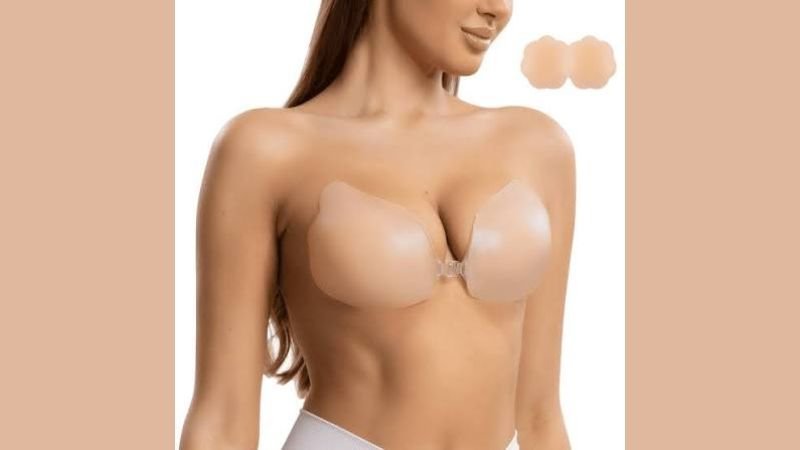
When buyers compare silicone bras, many products look similar at first glance. They are often described as strapless, backless, reusable, invisible and suitable for dresses or occasionwear. But once the product is worn on the body, the difference between a regular silicone bra and a push up silicone bra becomes much clearer.
A regular silicone bra is mainly designed to provide coverage and invisible wear. It helps the wearer avoid visible straps, back bands or bra lines under backless, strapless or fitted clothing. A push up silicone bra, however, has a more demanding job. It needs to bring the breasts closer together, create cleavage, improve shape and sometimes add a fuller visual effect.

For brands and wholesale buyers, this difference matters before sampling begins. If your customer only needs a discreet solution under a backless dress, a regular silicone bra may be enough. If your product promise includes lift, cleavage or volume enhancement, then you need to look closely at cup shape, thickness distribution, center connection, adhesive coverage and finished weight.
This guide compares push up silicone bras vs regular silicone bras from a sourcing and product-development perspective, so you can choose the right structure for your private-label collection.
What Is a Regular Silicone Bra?
A regular silicone bra is a basic type of silicone adhesive bra designed to replace a conventional bra when straps or back bands would be visible. It usually consists of two adhesive silicone cups, sometimes connected by a front clasp, and is worn directly on the skin. The main purpose is to provide nipple coverage, light shaping and a smooth appearance under clothing.

This type of bra is commonly used for backless or deep-V garments, strapless gowns, halter tops, thin summer clothing and light occasionwear. The customer is usually looking for a clean, invisible solution rather than a dramatic shaping effect. In this case, comfort, edge flatness, reliable adhesion and a natural look under fabric are more important than strong cleavage.
For regular silicone bras, buyers should pay close attention to the cup edge, skin-tone color, adhesive stability and how the product sits under different fabrics. If the edge is too thick, the cup may still show under fitted clothing. If the adhesive is weak or uneven, the cup may lift at the side or slide during wear. If the color is too light, too pink or too glossy, the product may look less invisible under sheer or light-colored garments.
Some regular silicone bras include a front clasp that can create a slight gathering effect, but this does not automatically make the product a true push up style. This is why buyers should separate basic coverage function from real push-up function when evaluating samples, especially when comparing different adhesive bra structures.
A regular silicone bra is mainly a coverage and invisible-wear solution, not a strong shaping product. It can be a very good item for a basic adhesive bra range, bridal emergency kit or wholesale accessory program, but it should not be sold with strong push-up claims unless the structure has been tested on the body.
What Makes a Silicone Bra Push Up?
A push up silicone bra is not simply a thicker version of a regular silicone bra. A real push-up effect comes from the way the cup structure, center connection and adhesive system work together. If one part is wrong, the product may look good on a table but fail when it is worn.
The first important factor is cup shape. A push up silicone bra usually needs a more three-dimensional cup curve than a basic flat silicone pad. The cup should follow the breast shape while guiding volume toward the center. If the cup is too flat, it may cover the breast but will not create cleavage. If the cup is too curved in the wrong area, it may press the breast unnaturally or create a visible edge under clothing.

The second factor is thickness distribution. Many push up silicone bras are thicker in selected areas, often near the lower or inner cup, to create a fuller visual effect. This does not mean the whole cup should simply become thicker. If the center area is too bulky, the product may look fake under clothing. If the edge is not thin enough, the cup outline becomes visible. A good push-up structure needs a controlled transition from the thicker shaping area to the thinner edge.
The third factor is the center connection. A front clasp, drawstring or lace-up structure can pull the two cups closer together and help create cleavage. But this pulling force also changes how the cup sits on the skin. If the center pull is too strong, the outer cup edge may lift. If the adhesive area is too small, the cups may not stay in place. If the cup is too stiff, the product may create tension instead of a natural shape.
The fourth factor is cup weight. Push up silicone bras are often heavier than regular silicone bras because they use more material or thicker shaping areas. Weight is not always a problem, but it must match the adhesive design. A heavier cup places more load on the skin-contact layer, especially when the center clasp or drawstring pulls the cups inward. For larger cup sizes, this balance becomes even more important.
This is where many low-quality push up silicone bras fail. They add thickness to create a more dramatic product image, but the adhesive system is not strong or stable enough for the extra weight. The result may be a sample that looks attractive in photos but lifts at the edge, slides down during wear or feels uncomfortable after a short time.
A push up silicone bra is a shaping product, so the cup structure and adhesive system must work together. Buyers should not approve this type of product based only on front-view images, because the real performance depends on how it behaves on the body.
Push Up Silicone Bra vs Regular Silicone Bra: Key Differences Buyers Should Compare
For sourcing, the most useful comparison is not whether one style looks more premium than the other. The real question is whether the product is designed for coverage or for shaping and cleavage. The table below gives buyers a practical way to compare both options before requesting samples or approving a private-label program.
| Comparison | Regular Silicone Bra | Push Up Silicone Bra |
|---|---|---|
| Main function | Coverage, invisible wear and backless dressing | Cleavage, lift, shaping and volume enhancement |
| Cup structure | Usually flatter or more basic | More structured cup curve with push-up direction |
| Thickness design | Often thinner or more evenly distributed | Usually thicker in selected shaping areas |
| Center connection | Simple clasp, separate cups or light gathering | Front clasp, drawstring or lace-up is more important |
| Adhesive requirement | Mainly stable skin contact | Must handle both adhesion and pulling force |
| Product weight | Usually lighter | Often heavier due to shaping structure |
| Wearing result | Natural, discreet and smooth | More visible cleavage and lifted breast shape |
| Main risk | Edge lifting, weak adhesion or poor color match | Excessive weight, unnatural shape, edge lifting or weak push-up effect |
| Best use case | Backless dresses, strapless outfits and light occasionwear | Deep V dresses, bridalwear, partywear, sensual lingerie and enhancement products |
After looking at the table, the sourcing decision becomes more practical. A regular silicone bra is usually easier to position as a general accessory item because it has broad use, simple functionality and more stable pricing. It works well when the customer wants an invisible bra solution without a strong shaping promise.

A push up silicone bra offers a stronger product story, but it also creates more development responsibility. If your product page promises lift or cleavage, the sample must prove that effect on real wearers, not only in product photos. The cup needs to hold the breast in the intended direction, the center connection must create controlled gathering, and the adhesive must remain stable after the pulling force is applied.
The biggest mistake is treating both products as the same category with a different name. Some suppliers call a regular clasp silicone bra a push up bra simply because the cups can be pulled together. That may be acceptable for a basic visual effect, but it is not enough for a serious brand that wants reliable shaping performance across different sizes.
The key difference is not only appearance. It is whether the product is designed for coverage or for shaping. Once that difference is clear, buyers can judge the sample in the right way.
Which Type Is Better for Your Product Line?
The better choice depends on your customer’s wearing expectation. A regular silicone bra and a push up silicone bra can both be strapless, backless and adhesive, but they serve different product roles in a collection.
A regular silicone bra is usually the better option for basic accessory lines, bridal emergency kits, light occasionwear, backless clothing and wholesale programs that need a reliable everyday solution. It is easier to explain, easier to stock and often easier to fit across a wider customer group. If your customer mainly wants a bra that disappears under clothing, this type of product may be enough.
This category also makes sense for buyers who prioritize price stability, simple packaging and repeat wholesale orders. The structure is usually less demanding than a push up design, although quality still matters. A regular silicone bra still needs clean edges, stable adhesive, suitable skin-tone options and clear care instructions. Poor adhesion or visible cup edges can quickly damage customer reviews, even when the product is positioned as a basic item.

A push up silicone bra is more suitable when the product line needs a stronger visual effect. It works better for deep V dresses, bridalwear, partywear, sensual lingerie, photoshoot styling and enhancement products where customers expect visible cleavage or fuller shape. In these cases, the customer is not only buying invisibility. She is buying a result.
However, the stronger the promise, the more carefully the product must be developed. A push up silicone bra should be tested on the body with the intended garment type. It should be checked under deep V clothing, fitted fabrics and movement conditions. The buyer should look at how the cup sits after the center is pulled, whether the breast shape looks natural, and whether the edge remains flat.
For larger cup sizes, the decision becomes more sensitive. A small cup push up design cannot always be enlarged directly for larger sizes. Bigger sizes may need a different cup curve, wider adhesive coverage, adjusted center pull and a different weight balance. If a factory simply scales up the mold without reconsidering support and adhesion, the larger size may become unstable.
A simple way to choose is this: if your customer only needs invisible coverage, choose a regular silicone bra. If your customer expects cleavage, lift or fuller shaping, choose a push up silicone bra and prepare for more detailed sample testing.
Choose regular silicone bras for invisible coverage. Choose push up silicone bras when shaping and cleavage are part of the product promise.
What Should Brands Check Before Sourcing a Push Up Silicone Bra?
Because a push up silicone bra carries a stronger performance promise, the sample should be reviewed more carefully than a basic silicone adhesive bra. A good-looking product image is not enough. Buyers should check how the product performs when worn, pulled, cleaned and reused.
1. Target Wearing Effect
Before asking for samples, define the level of push-up effect you want. Are you looking for light lift, stronger cleavage, fuller volume or simply a more gathered shape than a regular silicone bra? These are different outcomes, and they may require different cup shapes and center structures.
A clear target helps the factory recommend a realistic construction. Without it, the supplier may send a standard push up style that does not match your market. For example, a bridalwear customer may want a natural lift under a gown, while a sensual lingerie brand may prefer more visible cleavage.
2. Cup Thickness and Weight
For push up silicone bras, thickness is directly connected to both shaping and comfort. A thicker cup may improve volume, but it also increases weight. More weight means the adhesive must work harder, especially when the cup is pulled toward the center.

Buyers should confirm the center thickness, edge thickness and total weight per pair. The goal is not to make the cup as thick as possible. The goal is to create enough shaping effect without making the product heavy, bulky or unstable.
3. Cup Shape and Size Range
Cup shape is one of the most important points in push up performance. The cup should guide the breast upward and inward without flattening the breast or creating an unnatural outline. The inner cup, lower cup and outer edge must be considered together.
Size range should also be reviewed carefully. A small-size push up silicone bra may work well with a certain curve and adhesive area, but larger sizes may need more coverage or a different structure. Buyers should avoid approving only one small sample and then assuming all sizes will perform the same way.
4. Center Connection Design
The center connection is what often creates the visible push-up effect. It may be a front clasp, drawstring, lace-up structure or another gathering method. Each option creates a different pulling direction and different pressure on the cup.

A front clasp can be simple and easy for customers to use, while a drawstring or lace-up design may allow a more adjustable cleavage effect. However, stronger pulling is not always better. If the center pull is too aggressive, the cup edge may lift or the breast shape may look forced.
5. Adhesive Coverage
Adhesive coverage is especially important for push up silicone bras because the adhesive does more than hold the cup in place. It also helps resist the inward pull from the center connection and the downward load from the cup weight.
Buyers should check whether the adhesive area is wide enough, whether the outer cup edge stays flat and whether the adhesive remains stable after light movement. The adhesive should support the intended wearing time without making removal uncomfortable. Strong tack alone is not the same as good adhesive design.
6. Edge Stability
A push up silicone bra may look effective when the cups are pulled together, but that same pulling force can cause the upper edge or outer side to lift. This is one of the most common problems in poor-quality push up samples.
During sample review, the buyer should look at the cup edge before and after fastening the center. If the edge lifts after the clasp or drawstring is tightened, the product may show under clothing or feel insecure. This problem is usually related to cup curve, edge thickness, adhesive area or excessive center tension.
7. Wearing Comfort
A push up effect should not come at the cost of discomfort. If the cup is too heavy, too sticky, too stiff or pulled too tightly, the wearer may not use the product again. Comfort is especially important for bridal, eveningwear and event-related products because customers may wear the bra for several hours.
Buyers should evaluate the product on a fit model, not just on a mannequin or flat surface. Check whether the bra creates pressure, whether the skin pulls too much during removal, and whether the shape looks natural after movement. A product that creates cleavage for a short photo may still fail as a commercial item if it is uncomfortable in real wear.
8. Testing After Repeated Use
Many silicone bras are sold as reusable, but repeated-use performance depends on the adhesive system, cleaning method and storage conditions. For push up styles, this is even more important because the adhesive must continue supporting both weight and pulling force after cleaning.
The sample should be tested after washing, air drying and reapplying the protective film. Buyers should check whether the adhesive picks up dust easily, whether the cup edge remains flat and whether the push-up effect weakens after repeated wear. Claims such as “reusable” or “long-lasting” should be supported by testing, not only by supplier wording.
For push up silicone bras, the sample should be judged on the body, not only on the table. A table photo can show the cup shape, but only a wearing test can show whether the product actually creates the promised lift and cleavage.
9. Skin-Contact Claims
Because a push up silicone bra stays directly on the skin, brands should be careful with claims such as “hypoallergenic,” “sensitive-skin friendly,” “medical grade” or “skin-safe.” These claims should be supported by material documents or testing, not only by how soft the sample feels.
Buyers should confirm the skin-contact surface, adhesive layer, colorants and protective film separately. If proper documentation is not available, use safer wording such as “soft adhesive feel” or “designed for comfortable wear.”
Skin-contact claims should be supported by documentation, not sample touch alone.
FAQ
Q1: Is a push up silicone bra always thicker than a regular silicone bra?
Not always, but many push up silicone bras use selected thicker areas to create a fuller look or stronger shaping effect. The important point is not overall thickness, but where the thickness is placed. A well-developed push up bra may have more thickness in the lower or inner cup while keeping the edge thin enough to stay invisible under clothing.
If the whole cup is made too thick, the product may become heavy and obvious under fitted garments. Buyers should ask for center thickness, edge thickness and finished weight rather than only asking whether the cup is “push up.”
Q2: Can a regular silicone bra create cleavage?
A regular silicone bra can create slight gathering if it has a front clasp, but it may not create strong or stable cleavage. The result depends on the cup curve, adhesive area, breast shape and how much pulling force the center connection can apply without lifting the edges.
For brands that want a clear push-up promise, a regular silicone bra may not be enough. It is better to develop or select a product specifically designed for shaping, with the right balance of cup structure, center connection and adhesive coverage.
Q3: Which is better for bridalwear: regular or push up silicone bra?
Both can work for bridalwear, depending on the dress and the wearing expectation. A regular silicone bra is suitable when the bride mainly needs invisible coverage under a backless or strapless gown. It is often lighter, more discreet and easier to wear for long hours.
A push up silicone bra is more suitable when the dress has a deep V neckline or when the customer wants more cleavage and lift. For bridalwear undergarment choices, the product must still remain comfortable, stable and invisible under the fabric, so edge flatness and adhesive reliability should be tested carefully.
Q4: Why do some push up silicone bras lift at the edge?
Edge lifting usually happens when the center pull, cup curve, edge thickness and adhesive coverage are not balanced. When the front clasp or drawstring pulls the cups inward, the outer edge may lose contact with the skin if the adhesive area is too small or the cup is too stiff.
This problem may also appear when the cup is too heavy or the edge is too thick. During sample testing, buyers should fasten the center connection and then check whether the upper and outer edges remain flat. This is more useful than only looking at the product before it is worn.
Q5: Can push up silicone bras be developed for larger cup sizes?
They can be developed, but larger sizes need more careful engineering. A push up structure that works for smaller cups cannot always be enlarged directly. Larger cups usually require better weight control, wider adhesive coverage, adjusted cup depth and a more considered center-pull direction.
For larger sizes, the product should be tested on fit models in the intended size range. Buyers should not approve a full size range based only on one small sample. The larger the cup, the more important it becomes to balance shaping, adhesion and comfort.
Conclusion
A regular silicone bra and a push up silicone bra may both be adhesive, strapless and backless, but they are not developed with the same purpose. A regular silicone bra is mainly a solution for coverage and invisible wear, while a push up silicone bra is a shaping product designed to create lift, cleavage or a fuller breast appearance.
For buyers, the most important step is to match the product structure with the promise you want to make to your customers. If the goal is simple invisibility under backless clothing, a regular silicone bra may be the right choice. If the goal is visible cleavage or enhancement, then cup shape, thickness distribution, center connection, product weight and adhesive coverage must all be reviewed together.
The better sourcing question is not simply, “Do you have a push up silicone bra?” A more useful question is: Can this cup structure create the required wearing effect while staying comfortable, stable and invisible under the target garment? That is the difference between buying a generic adhesive bra and developing a product that performs in the real market.
Develop a Push Up Silicone Bra That Performs on the Body
A push up silicone bra is more than a thicker silicone cup. It needs the right balance of cup shape, thickness, weight, center connection and adhesive coverage to create a stable lifting effect without edge lifting, discomfort or an unnatural shape.
XieSheng can review your target market, reference style, cup size range, expected push-up effect and packaging direction before sampling begins. Our team will help you identify the key structure points and recommend a practical private-label development route for your silicone adhesive bra project. Please contact us!