In today’s market, customers expect more outfit-specific solutions. Backless dresses, strapless tops, low-cut garments, bridal looks, and occasionwear all create demand for products that offer shaping and support without visible straps or bands. This is where sticky bras play an important role. For B2B buyers, understanding the category is useful not only from a product perspective, but also from a merchandising and sourcing perspective.
This article explains what a sticky bra is, the most common product types, why the category has commercial value, which markets and customer groups it suits best, and what buyers should check before sourcing sticky bra products.
What Is a Sticky Bra?
Sticky bras are bras designed to provide shaping, light support, and coverage without traditional shoulder straps or back bands. Instead of relying on a conventional bra structure, it attaches directly to the skin using an adhesive inner surface. This allows it to work under garments where standard bras would be visible or unsuitable.

Sticky bras are typically used with backless, strapless, low-cut, or special-occasion outfits. Their purpose is not always the same as a full-support everyday bra. In many cases, they are designed to solve a styling problem rather than replace traditional lingerie altogether. For this reason, they are often positioned as functional intimate accessories as much as lingerie products.
In commercial terms, the sticky bra category sits between lingerie and fashion accessories. It overlaps with adhesive bras, invisible support products, and other outfit-specific intimate solutions. Depending on the design, it may serve customers who want shaping, lift, concealment, or a cleaner appearance under more revealing clothing.
For brands and wholesalers, it is useful to think of sticky bras as problem-solving products. They respond to specific styling needs, which gives them a clear use case and helps make them easier to merchandise when positioned correctly.
Common Types of Sticky Bra Products
Sticky bras are not one single product type. The category includes several variations, each designed to meet different style needs, price points, and customer preferences.
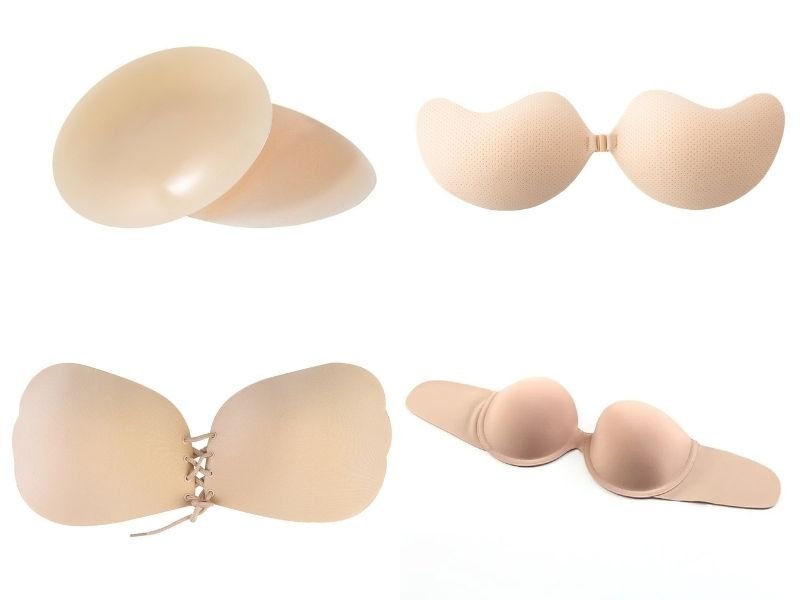
One of the most common types is the silicone sticky bra. This is often associated with smooth cup surfaces, direct skin adhesion, and a more seamless appearance under fitted garments. Silicone-based styles are frequently positioned as practical and invisible solutions for occasionwear and fashion use.
Another common type is the fabric adhesive bra. These products often combine a lighter fabric outer layer with adhesive support inside. Compared with silicone styles, they may offer a different visual feel, different comfort perception, and more variety in styling presentation.
Lace-up adhesive bras add a shaping or cleavage-enhancing function. These styles usually include a front closure or lace-up mechanism that helps create a more gathered look. They are often chosen when appearance enhancement is a stronger selling point.
Lifting sticky bras focus more directly on upward shaping and support. They may use different construction methods or additional adhesive design features to create a lift effect, especially for styling under more open or low-cut garments.
The category also overlaps with adhesive nipple covers and similar support products. While these are not always bras in the traditional sense, they are closely related in use and often sit within the same merchandising or product family.

A simple category comparison looks like this:
| Product Type | Main Function | Typical Use |
|---|---|---|
| Silicone sticky bra | Invisible coverage and light shaping | Backless and strapless outfits |
| Fabric adhesive bra | Lightweight coverage and support | Fashion and lingerie accessory programs |
| Lace-up adhesive bra | Cleavage enhancement and shaping | Occasionwear and statement styling |
| Lifting sticky bra | Lift and contour effect | Low-cut and shaping-focused outfits |
| Adhesive nipple covers | Coverage and invisibility | Minimal support, layering, or outfit solutions |
For buyers, product type matters because it affects positioning, packaging, target user expectations, and price logic. A basic silicone style may work well as a broad-market functional item, while a lace-up or lifting design may fit better in a more styling-driven or image-conscious assortment.
Why Sticky Bras Have Commercial Value for Brands and Wholesalers
Sticky bras offer commercial value because they are highly functional, easy to position, and relevant to multiple apparel and lingerie categories. Unlike products that require strong fashion education, sticky bras usually solve a visible and understandable need. This makes them easier to explain, easier to display, and easier to connect with related products.
For brands, sticky bras can strengthen an assortment by filling a practical gap. A fashion brand selling backless dresses or special-occasion garments can use sticky bras as complementary products. A lingerie brand can use them to expand beyond traditional bras and offer more outfit-specific solutions. A bridal brand can integrate them into wedding and event-focused assortments where invisibility and clean shaping are especially relevant.
For wholesalers, sticky bras are commercially attractive because they work well as accessory-driven add-on products. They can support cross-selling, improve assortment depth, and serve multiple downstream retail needs. Their use is not limited to one narrow channel, which makes them useful in broader distribution programs.

Sticky bras also benefit from being occasion-relevant. Products connected to partywear, bridalwear, eveningwear, and fashion styling often carry strong merchandising value because they can be linked directly to a use case. This gives buyers more flexibility in how the category is promoted and sold.
From a commercial perspective, sticky bras can create value in several ways:
- They support cross-selling with fashion and lingerie products
- They help diversify intimate product lines
- They fit well into occasion-led and accessory-led programs
- They offer practical value beyond pure aesthetic appeal
- They can work across multiple retail formats
This does not mean every sticky bra program will perform equally well. Commercial success still depends on product quality, correct market fit, and good sourcing. But as a category, sticky bras have clear business potential because they combine functionality with visual relevance.
Which Markets and Customer Types Are Best for Sticky Bra Products?
Sticky bras are most suitable for markets where outfit-specific solutions, fashion styling, and complementary intimate products have clear consumer demand. They are especially relevant in fashion retail, lingerie retail, bridalwear, occasionwear, and online accessory programs.
In fashion retail, sticky bras work well because they directly support garments such as backless dresses, strapless tops, deep-neck styles, and eventwear. Retailers can position them as styling solutions that improve the wearability of certain fashion items.
In lingerie retail, sticky bras expand the assortment beyond traditional bras and shapewear. They help buyers offer more specialized products for customers who need invisible support or occasion-based solutions.
In bridalwear and occasionwear, sticky bras are especially relevant because customers often need clean shaping and invisible support under formal garments. This makes them a strong complementary category rather than an isolated accessory.
In online accessory and apparel programs, sticky bras can work well because their use case is easy to communicate visually. With the right product presentation, buyers can position them clearly as practical additions to fashion-led purchases.

The customer types most relevant to sticky bra products usually include:
- Lingerie brands
- Fashion brands
- Bridal brands
- Wholesale distributors
- Accessory-focused retailers
- Selected multi-category retailers
For many of these customers, sticky bras are not always the hero product. Instead, they often work best as a complementary category that supports a broader assortment. This is especially important in B2B planning. Buyers should not always expect sticky bras to perform like core lingerie staples. In many cases, their strength comes from how well they connect with other products and outfit needs.
What B2B Buyers Should Check When Sourcing Sticky Bras
When sourcing sticky bras, buyers need to evaluate more than appearance. Because this category is highly functional, product performance is just as important as presentation. A visually attractive sticky bra that performs poorly in use can quickly lead to complaints, returns, and damage to customer trust.
One of the first things buyers should review is adhesive performance. A sticky bra must attach reliably and consistently within the expectations of the category. If adhesion is too weak, the product loses its basic function. If the material or adhesive creates discomfort, the product may also fail commercially.
Skin-friendly materials are another important point. Since the product comes into direct contact with the skin, material safety and user comfort matter. Buyers should assess whether the materials feel appropriate for prolonged wear and whether they support safe consumer use in the intended market.
Comfort should always be reviewed alongside function. A sticky bra needs to provide the intended solution without feeling overly uncomfortable, too rigid, or impractical in wear. In many cases, the balance between function and comfort is what determines customer satisfaction.
Shaping effect also matters. Depending on the product type, buyers should assess whether the product delivers the expected contour, lift, or coverage result. A product that looks appealing in packaging but does not create the intended effect in use is unlikely to generate repeat demand.
Reusability is another key area. For many sticky bra products, consumers expect a degree of repeated use. Buyers should therefore review whether the product is positioned correctly in terms of durability and whether its performance matches the claims made in packaging or marketing.
Packaging and instructions for use are especially important in this category. Sticky bras often require clearer guidance than standard lingerie items because product success depends on correct application, storage, and care. Poor instructions can lead to misuse, which may create the impression of product failure even when the issue is actually user handling.

A practical sourcing checklist includes the following:
| Sourcing Area | What Buyers Should Check |
|---|---|
| Adhesive performance | Strength, stability, and consistency of adhesion |
| Material safety | Skin-friendly surfaces and appropriate material quality |
| Comfort | Wearability, softness, and body feel |
| Shaping effect | Lift, contour, and support performance |
| Reusability | Product durability over repeated use |
| Packaging | Clear presentation and market-appropriate format |
| Instructions | Proper guidance for use, care, and storage |
For B2B buyers, the goal is to balance visual presentation with real product performance. Sticky bras may look simple, but they are highly expectation-sensitive products. Strong sourcing decisions in this category come from understanding both what the product promises and what it can realistically deliver.
FAQ
Q1:What are the most common types of sticky bras?
Common sticky bra products include silicone sticky bras, fabric adhesive bras, lace-up adhesive bras, lifting sticky bras, and adhesive nipple covers. Each type serves a different function, from invisible coverage to cleavage enhancement or lifting effect.
Q2: Why do sticky bras have commercial value for brands and wholesalers?
Sticky bras have commercial value because they solve a clear styling problem and can be used as complementary products in lingerie, fashion, bridal, and occasionwear assortments. They also support cross-selling, improve assortment depth, and help diversify product lines.
Q3: Which markets are best suited for sticky bra products?
Sticky bras are especially suitable for fashion retail, lingerie retail, bridalwear, occasionwear, and online accessory programs. They perform best in markets where invisible support and outfit-specific solutions are in demand.
Q4: What should brands check when sourcing sticky bras?
Buyers should review adhesive performance, skin-friendly materials, comfort, shaping effect, reusability, packaging, and instructions for use. In this category, product performance matters just as much as visual presentation.
Conclusion
Sticky bras are more than a simple fashion accessory. For brands and wholesalers, they represent a practical and commercially useful category that connects lingerie, fashion, and occasionwear needs. Their value comes from their ability to solve specific styling problems while also supporting assortment depth and cross-selling opportunities.
To make the category work, buyers need to understand more than the product name. They need to know the main product types, the markets where sticky bras are most relevant, and the sourcing factors that affect real performance. Adhesive quality, comfort, shaping effect, reusability, packaging, and instructions all play an important role in commercial success.
For B2B buyers, a sticky bra program works best when it is treated as a functional, complementary product category with clear market relevance. Buyers who understand the category well are more likely to build stronger assortments and make better sourcing decisions.
Source Sticky Bras with XieSheng
With 10 years of sticky bra and silicone bra manufacturing experience, XieSheng helps brands, wholesalers, and buyers develop reliable adhesive bra products with stable quality, practical support, and scalable OEM/ODM production. Send us your project details and let’s discuss the right solution for your market.