You are not only selling a sticky bra. You are selling confidence that it will stay in place when your customer needs it most.
That is why complaints like “the bra is not sticky anymore” should never be treated as a minor after-sales issue. If your customers say the adhesive failed after one wear, slipped during the day, or could not be reused after washing, the problem can quickly turn into returns, bad reviews, and doubts about your brand’s product quality.
The difficult part is that poor stickiness does not always mean the product itself is defective. It may come from low-grade adhesive, poor protective film, or weak product construction. But it may also come from skin oil, sweat, body lotion, dust, incorrect cleaning, or improper storage after use.
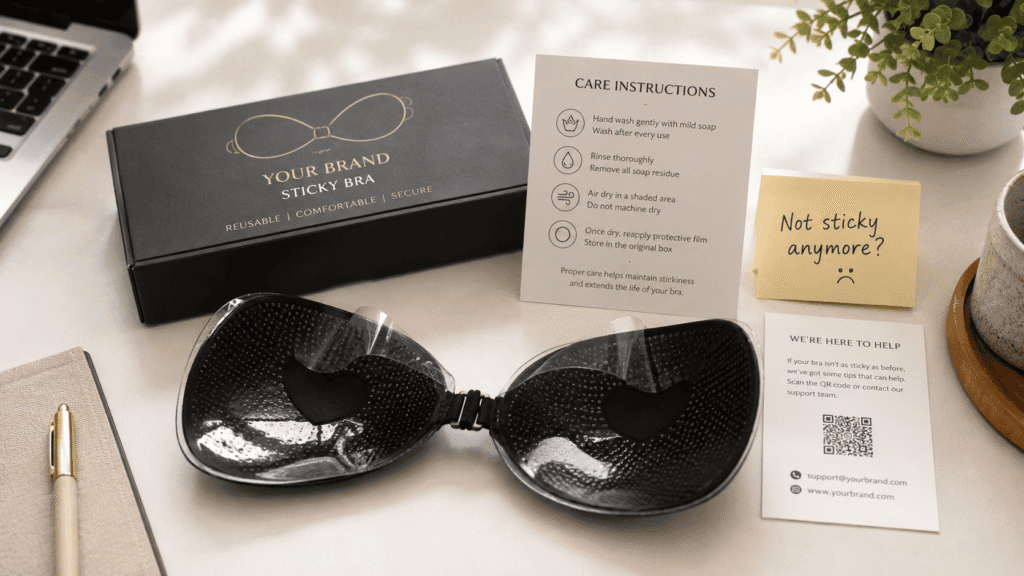
When you understand these causes, you can respond to your customers with more confidence. Instead of simply replacing the product or assuming every complaint is a quality issue, you can explain what may have happened, guide customers on proper cleaning and storage, and help them get better performance from the product.
For B2B brands, wholesalers, and retailers, this knowledge matters. Better care guidance can reduce unnecessary complaints, improve customer service, protect product reviews, and encourage repeat purchases.
As a sticky bra manufacturer supporting private label brands and wholesale buyers, we understand adhesive bras from both the production side and the after-sales side. This guide explains why sticky bras lose stickiness, how to make them sticky again safely, and how your brand can use better care instructions to support customers more professionally.
Can You Make a Sticky Bra Sticky Again?
Yes, in many cases, a sticky bra can become sticky again after proper cleaning.
When a reusable sticky bra loses grip, the adhesive surface is often covered by sweat, body oil, lotion, lint, dust, or residue from previous use. These layers block direct contact between the adhesive and the skin. Gentle cleaning can remove the buildup and help the adhesive perform better again.
The safest customer guidance is simple:
Wash the adhesive side gently with lukewarm water and mild soap, rinse away all residue, air dry with the adhesive side facing up, and reapply the protective film after drying.
However, this is important for your customer service team to understand:
Cleaning can restore tackiness only when the adhesive surface is dirty but still healthy. It cannot rebuild adhesive that is already worn out, cracked, deformed, or permanently damaged.
In other words, proper cleaning can revive a tired sticky bra. It cannot bring back a product that has already retired from duty.
Why Do Sticky Bras Stop Sticking?
When a customer says, “This sticky bra is defective,” the real reason may not be immediately obvious. For B2B sellers, understanding the cause helps you separate product quality issues from usage-related problems.

Sweat, Body Oil, and Lotion Can Block the Adhesive
Sticky bras are designed to attach directly to clean, dry skin. If your customer applies the bra over body lotion, sunscreen, perfume, oil, powder, or sweat, the adhesive cannot grip properly.
This is one of the most common reasons for poor stickiness.
For your product page or care card, it is worth stating clearly:
Apply only to clean, dry skin. Do not use lotion, oil, powder, or perfume before wearing.
This small instruction can prevent many unnecessary complaints.
Dust, Lint, and Fabric Fibers Reduce Tackiness
The adhesive surface can easily attract dust, lint, and tiny fabric fibers. This often happens when customers lose the protective film or store the sticky bra loosely in a drawer, cosmetic bag, or suitcase.
Once lint gets deeply embedded into the adhesive, it becomes difficult to remove completely. The bra may still be usable, but its grip will usually be weaker.
This is why protective film quality matters. It is not just packaging material. It is part of the product’s reusability system.
Incorrect Washing Can Damage the Adhesive
Many customers know they should wash a sticky bra, but not all of them know how.
Some may use hot water, alcohol, strong detergent, towels, tissues, wipes, or even a hair dryer. These methods can reduce adhesive performance or leave residue on the sticky surface.
A customer may think they are cleaning the product. In reality, they may be slowly destroying it with great enthusiasm.
Poor Storage Shortens Product Life
Sticky bras should be fully dry before storage. The adhesive side should be covered with protective film, and the product should be stored flat in a clean, dry place.
If customers fold the cups, press sticky sides together, expose the adhesive to dust, or store the bra in heat and humidity, product life can be shortened.
Adhesive Aging Is Normal After Repeated Use
A reusable sticky bra is not a permanent product. Every application, removal, washing, drying, and storage cycle affects the adhesive.
Even with good care, adhesive performance will gradually decline. That is normal. What matters is whether the product meets the expected use range for its price point, quality level, and product positioning.
For brands, it is better to communicate reusability honestly than to overpromise. A realistic promise protects your reputation better than a number that sounds impressive but cannot survive customer reviews.
How to Make a Sticky Bra Sticky Again: Guidance for Your Customers
When a customer says their sticky bra is no longer sticky, the first reaction should not be to assume the product has failed. Adhesive performance is affected by both product quality and how the customer applies, cleans, and stores the bra. A few simple questions can help your team understand what may have happened before offering a solution.
Start by checking how the bra was used. Was it applied to clean, dry skin? Did the customer use lotion, oil, sunscreen, perfume, powder, or body cream before wearing it? Was it worn in hot or sweaty conditions? These details matter because adhesive bras are designed to attach directly to dry skin. Anything sitting between the adhesive and the skin can reduce grip.
If the product was used correctly but has lost tackiness after wear, the safest recommendation is gentle cleaning. Ask the customer to rinse the adhesive side with lukewarm water. Hot water should be avoided because heat may affect the adhesive or cup material. The bra also should not be soaked for a long time. A light rinse is usually enough to loosen sweat, oil, dust, and other surface buildup.
If water alone is not enough, a small amount of mild soap can be used. The soap should be gentle, simple, and free from oils or heavy fragrance. Customers should avoid alcohol, bleach, strong detergent, fabric softener, makeup remover, oil-based cleanser, and heavily scented body wash. The adhesive does not need luxury skincare. It needs a clean surface.

When cleaning the adhesive side, customers should use their fingertips only. Towels, tissues, paper towels, brushes, and fingernails can leave fibers behind or damage the adhesive layer. This is a small detail, but it can make a real difference. Many customers think they are cleaning the bra more thoroughly when they scrub it, but in reality, they may be making the adhesive worse.
After washing, the customer should rinse the adhesive side thoroughly until there is no slippery feeling left. Soap residue is one of the easiest problems to overlook. If residue remains on the adhesive surface, the bra may feel clean but still fail to stick properly. A sticky bra with leftover soap is not restored; it is just very clean and still not very useful.
Drying is just as important as washing. The bra should be left to air dry naturally with the adhesive side facing up. Customers should not wipe it with a towel, use a hair dryer, place it under direct sunlight, put it in a dryer, or cover it before it is fully dry. Heat, friction, and fibers can all reduce adhesive performance.
Once the adhesive side is completely dry, the protective film should be reapplied before storage. This is one of the simplest ways to extend product life, but many customers forget it. For brands, this is also a reminder that the protective film should be easy to remove, easy to reapply, and clearly explained in the care instructions.
A good after-sales response does more than tell the customer to “wash it and try again.” It explains why the bra may have lost stickiness, gives the customer a safe way to restore it, and helps them avoid the same problem next time. For sticky bra brands and sellers, this kind of guidance can reduce unnecessary returns, improve customer satisfaction, and protect product reviews.
What Should Customers Avoid Putting on a Sticky Bra?
This is an important part of sticky bra aftercare, especially for brands that sell reusable adhesive bras online. When customers search for quick fixes, they may try methods that look harmless but can actually damage the adhesive or create skin-contact risks.
A sticky bra should be cleaned gently, not “repaired” with random household products.

Alcohol Is Not Always Safe for the Adhesive
Some customers use rubbing alcohol because they believe it can remove oil and make the bra sticky again. In some cases, alcohol may clean the surface, but it can also dry out, harden, or weaken certain adhesive layers.
Unless your product has been tested and clearly approved for alcohol cleaning, it is safer to tell customers not to use it. A simple care instruction such as “Do not clean with alcohol” can prevent a lot of unnecessary damage.
Hairspray, Glue, and Adhesive Gel Are Not Suitable Fixes
Customers may also try hairspray, craft glue, silicone gel, or other adhesive products to bring back stickiness. These materials are not designed for reusable intimate products worn directly on the skin.
They can leave residue, create uneven adhesion, affect comfort, or cause skin irritation. More importantly, once a customer adds another adhesive to the product, it becomes much harder to judge whether the problem came from the original bra or from the repair attempt.
For brands, this matters. One unsafe DIY fix can quickly become a product safety complaint.
Double-Sided Tape Should Only Be an Emergency Option
Fashion tape or double-sided tape may help hold an edge in place for one occasion, but it does not restore the original adhesive layer. It can also change how the bra fits, feels, and supports the wearer.
If a customer needs extra tape every time they wear the bra, the product is no longer performing as intended. At that point, it is better to explain proper replacement rather than encourage repeated temporary fixes.
Powder, Lotion, Oil, and Perfume Should Stay Away from the Adhesive
Powder may help reduce moisture on the skin, but it should never be applied to the adhesive surface. Once powder gets onto the sticky side, it creates a barrier between the adhesive and the skin.
The same applies to body lotion, oil, sunscreen, perfume, and cream-based skincare products. These products may be fine for normal body care, but they are not friendly to sticky bras.
For your product page or care card, keep the message simple:
Apply only to clean, dry skin. Keep alcohol, oil, lotion, powder, perfume, and strong cleaners away from the adhesive side.
This kind of instruction is easy for customers to understand and much easier for your after-sales team to repeat consistently.ts onto the adhesive surface, it can block stickiness. Customers should keep powder, lotion, oil, and perfume away from the adhesive side.
How Should Different Sticky Bra Products Be Cared For?
Not all adhesive products should be explained in the same way. If your brand sells multiple sticky bra styles, care instructions should be matched to product type.
| Product Type | Common Use | Customer Care Notes |
|---|---|---|
| Silicone Sticky Bra | Backless dresses, bridalwear, occasionwear | Clean the adhesive side gently after each use; avoid lint, heat, and sharp folding. |
| Fabric Adhesive Bra | Summer outfits, light support, fashion accessories | Avoid soaking fabric edges; dry completely before storage. |
| Nipple Covers | Thin tops, bridal dresses, summer clothing | Use minimal soap; avoid bending or stretching thin edges. |
| Lifting Pasties | Low-cut and backless outfits | Do not stretch the adhesive film while cleaning. |
| Boob Tape | Lift and shaping support | Usually single-use unless the product clearly states it is reusable. |

This is one area where many consumer-facing care guides are too general. “Sticky bra” can refer to several product structures. A silicone bra, fabric adhesive bra, nipple cover, and lifting pasty may all require slightly different customer guidance.
For B2B brands, this is important. If your care instructions are too generic, customers may use the wrong cleaning method for the wrong product.
How Can You Handle Common Sticky Bra Complaints?
A clear troubleshooting guide helps your customer service team respond faster and more professionally.
| Customer Complaint | Possible Cause | Suggested Response |
|---|---|---|
| “The bra is not sticky anymore.” | Sweat, oil, lotion, dust, or adhesive aging | Ask about skin preparation and cleaning method; recommend gentle washing and air drying. |
| “It stopped sticking after one use.” | Applied to oily skin, worn in heat, or stored without film | Explain proper application and storage; check whether the product was cleaned correctly. |
| “It slips after a few hours.” | Sweat, wrong placement, weak support style, or unsuitable use case | Suggest applying to clean, dry skin and choosing a stronger support style if needed. |
| “It does not stick after washing.” | Soap residue, towel fibers, or adhesive damage | Recommend rinsing thoroughly and air drying; assess if adhesive is already worn out. |
| “The edges are curling.” | Folded storage, missing protective film, or repeated use | Recommend flat storage with film; replace if edges are permanently deformed. |
| “There is lint stuck on it.” | Stored without protective film | Recommend gentle rinsing; avoid wiping with tissue or towels. |
This kind of guide can be used internally by sales teams, customer service teams, and e-commerce support staff.
It helps your team avoid two common mistakes:
First, blaming the customer too quickly.
Second, replacing every product without understanding the cause.
Neither is ideal. A professional response should educate, solve, and protect the relationship.
How Many Times Can a Sticky Bra Be Reused?
This is one of the most sensitive questions for brands.
Customers want a clear number. Sellers want a strong selling point. But if the number is too aggressive and not supported by product testing, it can create problems later.
The honest answer is: The number of uses depends on adhesive quality, skin condition, climate, cleaning habits, storage, and product structure.

A reusable sticky bra may last longer when customers:
- apply it to clean, dry skin;
- avoid lotion, oil, powder, and perfume;
- wash it gently after use;
- air dry it properly;
- reapply the protective film;
- store it flat and clean;
- avoid heat, dust, and moisture.
For B2B buyers, this means you should be careful with fixed claims such as “reusable 30 times” or “wears up to 50 times” unless your supplier can support that claim with reliable product-specific testing.
A strong product claim may help conversion. An unrealistic product claim may help returns arrive faster.
When Should Customers Replace a Sticky Bra?
A good care guide should not suggest that every sticky bra can be saved forever. That would not be honest, and it would not help your brand.
Customers should replace the sticky bra when:
- cleaning no longer restores tackiness;
- the adhesive feels smooth instead of sticky;
- the adhesive surface becomes cloudy, cracked, or uneven;
- lint is deeply embedded into the adhesive;
- the cup shape is deformed;
- the edges are permanently curled;
- the bra slips even on clean, dry skin;
- the product causes irritation after normal use;
- the protective film no longer attaches properly.
For brands, this section is useful because it helps set realistic expectations. It also gives your customer service team a clear basis for explaining when a product is worn out rather than defective.
What Should B2B Buyers Check Before Choosing a Sticky Bra Supplier?
If your customers frequently complain about poor stickiness, care instructions are only one part of the solution. You also need to evaluate the product itself.
Before placing bulk orders, B2B buyers should check these points with their sticky bra supplier or manufacturer.

Adhesive Quality
Ask about adhesive type, skin-contact comfort, tackiness, washing tolerance, and reusability expectations. A sticky bra should not only feel sticky at first touch. It should remain usable after normal wear and cleaning.
Cup Material and Product Structure
Silicone cups, fabric adhesive cups, foam-based cups, and film-based products behave differently. The structure should match the intended use case, such as bridalwear, backless dresses, summer outfits, or retail accessory programs.
Protective Film Quality
A poor protective film can reduce the product’s real-life usability. If the film is too thin, easily deformed, difficult to reapply, or contaminated during packing, customers may not store the product correctly.
Packaging Protection
Packaging should protect both the cup shape and adhesive surface during shipping and storage. If products are compressed, overheated, or poorly protected, the customer experience may suffer before the product is even worn.
Care Instruction Support
A good sticky bra manufacturer should help you prepare clear care instructions for your packaging, product page, and customer service team.
For private label brands, care guidance is part of product development—not an afterthought written five minutes before launch.
Why Care Instructions Matter for Your Brand
For B2B sellers, sticky bra care instructions are not just a customer education tool. They are a risk control tool.
Clear care guidance can help you:
- reduce unnecessary complaints;
- lower return rates;
- protect product reviews;
- improve customer satisfaction;
- help support teams answer questions faster;
- reduce confusion between product defects and misuse;
- improve repeat purchase potential.
Many sticky bra problems happen after the product leaves the warehouse. That means your brand needs to manage the customer experience after purchase, not only the product quality before shipment.
A well-made product plus poor instructions can still lead to poor reviews.
A well-made product plus clear instructions gives your customer a much better chance of success.
What Should You Include in a Sticky Bra Care Card?

If you sell private label sticky bras, adhesive bras, silicone bras, nipple covers, or lifting pasties, we strongly recommend including a simple care card in the packaging.
Your care card should explain:
- how to prepare the skin before wearing;
- what not to apply before use;
- how to clean the adhesive side;
- how to dry the product;
- how to store it;
- when to stop using it.
Here is a simple care card wording you can adapt for your brand.
Suggested Sticky Bra Care Card Wording
Sticky Bra Care Instructions
Apply only to clean, dry skin.
Do not use lotion, oil, powder, or perfume before wearing.
After each use, gently rinse the adhesive side with lukewarm water.
Use mild soap only when needed.
Do not use alcohol, bleach, strong detergent, or a washing machine.
Air dry with the adhesive side facing up.
Reapply the protective film after the adhesive is fully dry.
Store flat in a clean, dry place.
Replace the product if the adhesive becomes damaged, cracked, or no longer tacky after cleaning.
This care card does not need to be complicated. It just needs to be clear enough that customers do not accidentally ruin the product and then blame your brand for it.
How Can Brands Use This Information in Customer Service?
This article can also help your team respond to sticky bra complaints more professionally.
Instead of replying:
“Please wash it and try again.”
Your team can say:
“Sticky bras may lose grip when the adhesive surface is covered by body oil, sweat, lotion, dust, or lint. Please gently rinse the adhesive side with lukewarm water, use mild soap only if needed, air dry it with the adhesive side facing up, and reapply the protective film once fully dry. Also make sure the product is applied only to clean, dry skin without lotion or oil.”
This response is more helpful because it explains the reason, gives steps, and reduces the chance of the same problem happening again.
For B2B sellers, professional customer education can turn a complaint into a service moment. Not every complaint has to become a refund. Sometimes it becomes an opportunity to show that your brand knows the product well.
FAQ
Q1:How do you make a sticky bra sticky again?
In many cases, a sticky bra can become tacky again after gentle cleaning. Rinse the adhesive side with lukewarm water, use mild soap only when needed, rinse away all residue, then air dry it with the adhesive side facing up. After it is fully dry, reapply the protective film before storage.
Q2: Why do sticky bras lose stickiness?
Sticky bras usually lose stickiness when sweat, body oil, lotion, dust, lint, or soap residue blocks the adhesive surface. Poor storage, incorrect washing, heat, humidity, and normal adhesive aging can also reduce tackiness over time.
Q3: Can a sticky bra be washed?
Yes. Most reusable sticky bras can be gently hand washed. The adhesive side should be rinsed with lukewarm water and cleaned with fingertips. Hot water, machine washing, strong detergent, alcohol, bleach, towels, tissues, and hair dryers should be avoided.
Q4: How should brands explain sticky bra care?
Brands should explain care instructions clearly and simply: apply only to clean, dry skin; avoid lotion, oil, powder, and perfume before wearing; wash gently after use; air dry naturally; reapply the protective film after drying; and store flat in a clean, dry place.
Q5: What should be avoided before wearing a sticky bra?
Before wearing a sticky bra, the skin should be free from lotion, oil, powder, sunscreen, perfume, and sweat. These substances can create a barrier between the adhesive and the skin, reducing grip and increasing the chance of slipping.
Q6: Can nipple covers be reused?
Some nipple covers are reusable, while others are designed for single use. Reusable nipple covers should be cleaned gently, air dried, and stored with protective film. Brands should state clearly on the product page and packaging whether the item is reusable or disposable.
Q7: How many times can a sticky bra be reused?
Reuse time depends on adhesive quality, product structure, skin condition, climate, cleaning habits, and storage method. Brands should avoid fixed reuse claims unless they have product-specific testing to support them. A realistic claim is safer than an attractive number that cannot survive real use.
Q8: When should a sticky bra be replaced?
A sticky bra should be replaced when the adhesive feels smooth, cracked, cloudy, uneven, deeply contaminated with lint, or no longer sticks after proper cleaning. It should also be replaced if the cup shape is deformed, the edges curl permanently, or irritation occurs during normal use.
Q9: Why should B2B sellers include sticky bra care instructions?
Care instructions help reduce misuse and make after-sales communication easier. For B2B sellers, clear guidance can reduce complaints, protect product reviews, lower unnecessary returns, and improve the overall buying experience for retail and online sales channels.
Q10: What should a sticky bra manufacturer provide besides the product?
A professional sticky bra manufacturer should support product structure selection, adhesive quality control, material options, protective film selection, packaging suggestions, sample testing, bulk production consistency, and clear care instruction guidance that brands can use for product pages, packaging, and after-sales support.
Conclusion
Sticky bra care is not just an after-sales detail. For B2B sellers, clear care guidance can reduce complaints, protect product reviews, and help buyers explain the product more professionally.
Choosing the right adhesive quality, use reliable protective film, give clear care instructions, and train your sales or support team to explain proper use, cleaning, drying, storage, and replacement signs.
Looking for Private Label Sticky Bras?
If you are developing reusable sticky bras, silicone bras, nipple covers, lifting pasties, or adhesive bra accessories for your retail or wholesale program, XieSheng can support OEM/ODM development from product structure to packaging and bulk production.
As an experienced adhesive bra manufacturer, we help private label brands and wholesale buyers evaluate adhesive performance, cup material, skin-contact comfort, protective film, custom packaging, and aftercare instructions before moving into mass production.
If your goal is not only to sell sticky bras, but to reduce complaints and build a product customers trust, the right manufacturing partner matters.
Explore our Sticky Bra OEM/ODM manufacturing solutions to develop adhesive bra products that are easier to use, easier to explain, and better prepared for retail customers.