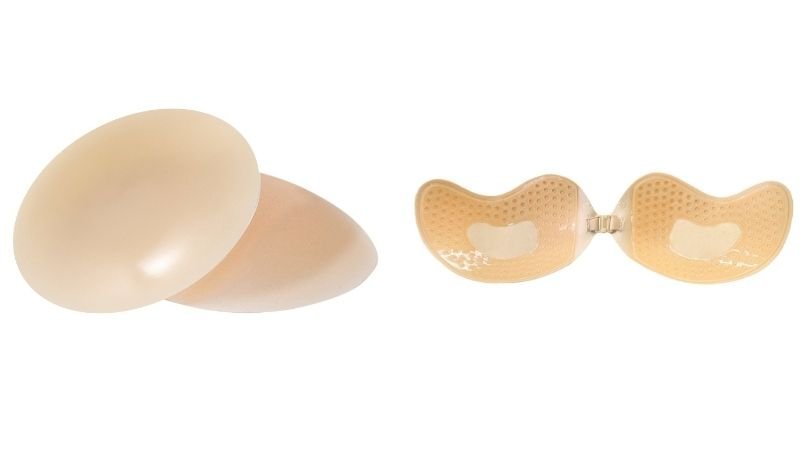
Sticky bra, also known as adhesive bra, is a common product for strapless, backless, formal wear, wedding dresses, summer clothing and other scenarios. It solves the problem of visible bra straps and discomfort caused by traditional bras in special dressing occasions, becoming an essential item for many consumers.

However, many brands often fall into a dilemma when developing their sticky bra product lines: should they choose silicone bra or fabric adhesive bra? While both products serve a similar purpose, they differ significantly in material, comfort, performance, and commercial positioning.
This article aims to help brands and buyers optimize their procurement strategies from the perspectives of materials, comfort, support, applicable scenarios, market positioning, and OEM customization, so as to select the products most suitable for their own brand development.
What Is a Silicone Bra?
Silicone bra is a type of sticky bra usually made of skin-friendly or medical-grade silicone material. Its surface is soft and smooth, with a strong skin-fitting feeling, which can closely fit the chest skin without obvious foreign body sensation. The adhesive layer on the inner side is designed to be skin-friendly, ensuring that it can be firmly attached to the skin without causing damage to the skin, and can be reused after proper cleaning and maintenance. Its main advantage lies in its ability to mimic the look and feel of natural skin, making it highly suitable for invisible wear.

Common features
- The touch is very close to human skin, with a natural and smooth texture, and the visual sense of wearing is more natural and invisible.
- It has a certain thickness, which can effectively shape the chest shape, gather the chest, and create a plump and three-dimensional effect.
- It is especially suitable for matching with backless, deep V, formal wear, party dresses and other clothing that requires invisible wearing, which can avoid the embarrassment of exposed bra straps and ensure the integrity of the clothing style.
- The color is mostly close to the skin tone, and the edge is designed to be thin and smooth, which is not easy to be seen under the clothing, and the visual invisibility is better than most fabric adhesive bras.
In the market, silicone bras are often associated with occasion-based usage. They are commonly used under bridal gowns, evening dresses, and deep-cut outfits where both invisibility and shaping are important. The material itself provides a certain level of structure, allowing the product to create a fuller and more defined silhouette.
Because of this, silicone bras are typically positioned as a more premium option within the sticky bra category.
What Is a Fabric Adhesive Bra?
Fabric adhesive bra is a sticky bra composed of two main parts: an outer fabric layer and an inner adhesive layer. The outer fabric is usually made of soft and breathable fabrics such as nylon, spandex, or polyester blends, which is consistent with the fabric texture of ordinary bras; the inner adhesive layer is a medical-grade pressure-sensitive adhesive, which has good adhesion and skin-friendliness, and can be attached to the chest stably without leaving glue marks.Compared to silicone bras, the product feels more like a traditional bra in terms of texture and weight.

Common features
- The surface is made of fabric, which feels more like ordinary bras, soft and skin-friendly, and has no cold touch like silicone.
- Compared with full silicone bras, the weight is usually lighter, which reduces the sense of weight on the chest and is more comfortable to wear for a long time.
- The fabric layer has good air permeability, which can effectively reduce the stuffiness caused by long-term wearing, and is more suitable for hot weather.
- It is more oriented to daily wear, summer casual wear, travel and other light support scenarios, focusing on comfort and convenience, and is suitable for consumers who pursue a natural wearing experience.
The main advantage of fabric adhesive bras is wearability. They are generally lighter, more breathable, and easier to use for longer periods. Instead of focusing on shaping, they are designed to provide a natural look with basic support.
In most markets, fabric adhesive bras are positioned as a more practical and accessible product. They are commonly sold as everyday solutions for summer outfits, travel, or casual wear.
Silicone Bra vs Fabric Adhesive Bra: Key Differences
For buyers, the most efficient way to evaluate these two product types is to compare them across key commercial and performance factors, including not only material and comfort, but also product lifespan and reusability.
| Factor | Silicone Bra | Fabric Adhesive Bra |
|---|---|---|
| Material | Full silicone construction | Fabric outer + adhesive inner |
| Wearing feel | Skin-like, smooth | Lightweight, fabric-like |
| Support level | Strong shaping and lift | Light, natural support |
| Breathability | Lower | Higher |
| Weight | Heavier | Lighter |
| Usage lifespan | Generally longer if properly maintained | Typically shorter due to fabric and adhesive wear |
| Reusability | Usually more reusable (can maintain adhesion over more uses) | Limited reuse depending on adhesive quality |
| Typical usage | Bridal, eveningwear | Daily wear, summer use |
| Price positioning | Mid to premium | Flexible, mass-market |
| Customer expectation | Shaping and invisibility | Comfort and convenience |
From a commercial perspective, lifespan and reusability can directly influence perceived value. Silicone bras are often positioned as a longer-lasting product when properly cared for, which supports higher pricing. Fabric adhesive bras, while more comfortable, are usually positioned as lighter, more accessible items with a shorter usage cycle.difference is critical. Silicone bras are usually sold based on visual effect, while fabric adhesive bras are sold based on comfort and usability.
Which One Offers Better Comfort?
Comfort is one of the most important factors influencing long-term product performance.
Silicone bra has a strong skin-fitting feeling, which can fit the chest curve closely, and there is no obvious gap between the bra and the skin, so it has a good sense of fit when worn. However, due to the material characteristics of silicone, its weight is relatively heavier than that of fabric adhesive bras, which will bring a certain sense of weight to the chest, especially for consumers with larger cup sizes.
In addition, the air permeability of silicone is relatively poor. If worn for a long time, it is easy to cause stuffiness and sweating, which affects the comfort. At the same time, different skin types have different reactions to the adhesive of silicone bras. Some sensitive skin may have slight irritation, so it is necessary to pay attention to the selection of skin-friendly adhesive materials.

Fabric adhesive bra is lighter in weight, which can effectively reduce the burden on the chest, and there is almost no sense of weight when worn. The outer fabric is soft and skin-friendly, with a touch similar to ordinary bras, which is more in line with the wearing habits of most consumers.
Moreover, the fabric has good air permeability, which can accelerate air circulation, avoid stuffiness and sweating even when worn for a long time, and is more suitable for hot summer or long-term wearing scenarios. In general, the breathability and comfort of fabric adhesive bras are more easily accepted by the majority of consumers, especially those who pursue daily comfort.
For brands focused on repeat purchases and daily usage, comfort often outweighs shaping performance.
Which One Provides Better Lift and Shape?
From a product performance standpoint, silicone bras has a certain thickness and toughness, which can effectively gather the chest, enhance the lifting effect, and create a full, concentrated and three-dimensional chest shape. It is especially suitable for low-cut, formal wear, wedding dresses and other scenarios that require a good shaping effect.
For consumers with small to medium cup sizes, silicone bras can better highlight the chest curve and meet the demand for beautiful dressing. Even for consumers with larger cup sizes, silicone bras can also provide better support and shaping effect, avoiding the problem of chest sagging when wearing strapless or backless clothing.

Fabric adhesive bra is more inclined to light support, focusing on maintaining the natural chest shape, without excessive shaping and lifting. It is suitable for daily invisible wearing, such as matching with off-the-shoulder T-shirts, summer dresses and other casual clothing, which can avoid the exposure of bra straps while maintaining a natural and comfortable wearing state.
It should be noted that the support capacity of fabric adhesive bras is limited, especially for consumers with large cup sizes, it may not be able to provide sufficient support, and there may be sagging or displacement, so brands need to be cautious in positioning when targeting large cup size markets.
This difference directly affects product positioning. Silicone bras are often marketed as a solution for specific occasions, while fabric adhesive bras are positioned as a practical everyday item.
Market Fit and Sales Channel Considerations
Different sticky bra types perform better in different retail environments.
Silicone bra is usually more suitable for bridal shops, occasionwear stores and other channels. Because the main customers of these channels are consumers who need to wear wedding dresses, formal wear, party dresses and other clothing, they have high requirements for the shaping effect and invisibility of sticky bras.
Silicone bras can better meet these needs, help consumers show a perfect body curve when wearing occasionwear, and the higher price positioning is also in line with the consumption capacity and demand of customers in these channels.

Fabric adhesive bra is more suitable for mass retail channels such as supermarkets, convenience stores and discount stores. The main customers of these channels are the general public, who pay more attention to cost performance, comfort and practicality.
Fabric adhesive bras have a more flexible price positioning, lighter comfort and more suitable for daily wear, which is in line with the consumption demand of the mass market. In addition, fabric adhesive bras are also suitable for summer promotion and travel supplies areas, which can meet the temporary needs of consumers for invisible bras in summer or travel.
Both silicone bra and fabric adhesive bra can be developed for online brands, but it is recommended to stratify according to the customer group. For online brands targeting high-end customers, focusing on shaping effect and scenario-based dressing, silicone bras can be taken as the core product, and the selling points can be highlighted as high-quality materials, excellent shaping, invisible appearance and other premium features.
For online brands targeting the mass market, focusing on daily comfort and cost performance, fabric adhesive bras can be the main product, and the selling points can be emphasized as lightness, breathability, comfort and high cost performance. At the same time, online brands can also launch combination products of the two to meet the diverse needs of different customers.
OEM / ODM Considerations for Buyers
Customization options
When sourcing sticky bras, the product type is only part of the decision. Manufacturing feasibility and customization options also play a critical role.
Buyers typically need to consider factors such as material selection, adhesive performance, color matching, and packaging requirements. Each of these elements can influence cost, lead time, and MOQ.
For example, silicone bras often involve mold-based production, while fabric adhesive bras may require more flexibility in textile sourcing. Both types require careful control of adhesive quality, as this directly affects product performance and customer satisfaction.
From a development perspective, balancing customization and production efficiency is key to achieving a workable order structure.

MOQ and production complexity
The MOQ (Minimum Order Quantity) of silicone bra and fabric adhesive bra will be affected by many factors, including materials (special silicone or fabric may require higher MOQ), glue (customized glue formulas may increase the MOQ), colors (the more color options, the higher the MOQ usually), packaging (customized packaging such as gift boxes may have higher MOQ requirements), cup types (special cup types may require mold opening, which increases production complexity and MOQ), and adhesive testing (if special adhesive testing is required, it may affect the production cycle and MOQ).
In terms of production complexity, silicone bras involve silicone molding, adhesive coating and other processes, and the production process is relatively complex; fabric adhesive bras involve fabric cutting, sewing, adhesive lamination and other processes, and the production process is relatively simple, but the quality control of the combination of fabric and adhesive needs to be paid attention to.
Quality control points
When carrying out OEM/ODM cooperation, brands and buyers need to focus on the following quality control points:
- Adhesion stability (ensure that the bra can be firmly attached to the skin without displacement or falling off during wearing, and the adhesion will not decrease significantly after multiple uses)
- Glue safety (the adhesive must meet medical-grade standards, non-toxic, non-irritating, and will not cause skin allergies or damage)
- Number of repeated uses (clarify the number of times the product can be reused, and ensure that the adhesion and shape are still stable within the specified number of uses)
- Edge fit (the edge of the bra should be smooth and thin, fit the skin closely, and not curl or scratch the skin)
- Packaging protection (the packaging should be able to effectively protect the product from deformation
- Pollution or damage during transportation and storage)
- Impact of temperature and humidity storage (ensure that the product can maintain good performance under different storage temperature and humidity conditions, and avoid adhesion failure or product deformation)
How to Choose the Right Option for Your Brand
The choice between silicone bras and fabric adhesive bras should be based on your brand’s positioning rather than personal preference.
You should lean toward silicone bras if your product strategy focuses on:
- Stronger shaping effect to meet the needs of consumers for chest shaping
- Bridal or eveningwear positioning, focusing on scenario-based dressing needs
- Skin-like invisible appearance to match various occasionwear
- Premium product line to improve brand grade and profit margin
- Higher perceived value to attract high-end customers

Fabric adhesive bras are more suitable if your brand emphasizes:
- Lighter comfort to meet the needs of daily long-term wearing
- Better breathability to adapt to hot weather or long-term wearing scenarios
- Mass retail price point to adapt to the consumption capacity of the mass market
- Daily wear positioning, focusing on practicality and comfort
- Travel or summer collection to meet the temporary needs of consumers
- Lower entry barrier for customers to expand the customer base
In many cases, established brands choose to include both options in their product range, using each type to target different customer segments.
Common Buyer Mistakes to Avoid
When entering the sticky bra category, buyers often make similar mistakes:
- Only focusing on the unit price and ignoring the target market: Blindly pursuing low unit price may lead to the product not meeting the needs of the target customers, resulting in poor sales. It is necessary to balance the unit price and product quality according to the target market positioning.
- Failing to confirm the safety and stability of the adhesive: The adhesive is the core component of the adhesive bra. If the safety and stability are not up to standard, it may cause skin allergies or product failure, affecting the brand reputation.
- Ignoring the choice of skin tone: The invisibility of the adhesive bra is closely related to the skin tone. If only a single skin tone is provided, it may not be suitable for all consumers, reducing the user experience.
- Not testing the adhesion under different temperatures: The adhesion of the adhesive will be affected by temperature. If the adhesion is not tested under high or low temperature conditions, it may lead to poor adhesion in extreme environments.
- Having excessively high expectations for the support effect of large cup sizes: Both types of adhesive bras have limited support for large cup sizes. Blindly pursuing high support may lead to product failure and customer complaints.
- The packaging is too simple, leading to deformation or pollution during transportation: Simple packaging cannot effectively protect the product, which may cause the product to be deformed or polluted during transportation, affecting the product quality and customer experience. impact of packaging and presentation
Avoiding these issues can significantly improve product success and reduce sourcing risks.
Final Recommendation: Which Is Better for Your Brand?
There is no single answer to which product is better. The right choice depends on how well the product aligns with your brand’s positioning, target market, and sales channel.
Silicone bras are more suitable for brands focused on shaping, aesthetics, and occasion-based usage. Fabric adhesive bras are better for brands targeting comfort, practicality, and everyday wear.
From a long-term perspective, the most effective strategy is often not choosing one over the other, but building a product structure that includes both—each serving a different role in your collection.
FAQ
Q1: What is the main difference between a silicone bra and a fabric adhesive bra?
The main difference is the material and wearing experience. A silicone bra is usually made with a full silicone body and offers stronger shaping and invisibility, while a fabric adhesive bra uses a fabric outer layer with adhesive on the inside, making it lighter, more breathable, and more suitable for daily wear.
Q2: Can silicone bras and fabric adhesive bras be customized for private label brands?
Yes. Both types can be customized for OEM/ODM and private label projects. Common customization options include cup shape, adhesive strength, skin-tone colors, fabric surface, front closure, logo packaging, retail box, pouch, or polybag.
Q3: What affects MOQ for silicone bras and fabric adhesive bras?
MOQ is affected by materials, adhesive type, cup shape, colors, packaging, mold requirements, and testing needs. Silicone bras may involve mold-based production, while fabric adhesive bras may involve fabric sourcing, cutting, sewing, and adhesive lamination.
Q4: How should brands choose between silicone bra and fabric adhesive bra?
Brands should choose based on product positioning, target customers, sales channels, and price strategy. Silicone bras are better for shaping, premium positioning, and occasionwear. Fabric adhesive bras are better for comfort, daily wear, summer collections, and mass retail markets.
Conclusion
In summary, silicone bra and fabric adhesive bra have their own advantages and applicable scenarios, and there is no absolute distinction between good and bad.
The core of choosing the right product for the brand is to accurately grasp the brand’s own positioning, the needs of the target customer group, the characteristics of the sales channel and the price strategy.
A well-planned adhesive bra program should balance performance, comfort, and commercial viability, supported by a manufacturer that understands both product development and market positioning.
Planning an Adhesive Bra Collection for Your Brand?
With over 15 years of experience in adhesive bra manufacturing, XieSheng supports brands, wholesalers, and retailers with silicone bras, fabric adhesive bras, and private label development.
Whether you are developing silicone bras, fabric adhesive bras, or a complete sticky bra range, we can help you evaluate product structure, adhesive performance, customization options, MOQ, and packaging solutions for your target market.