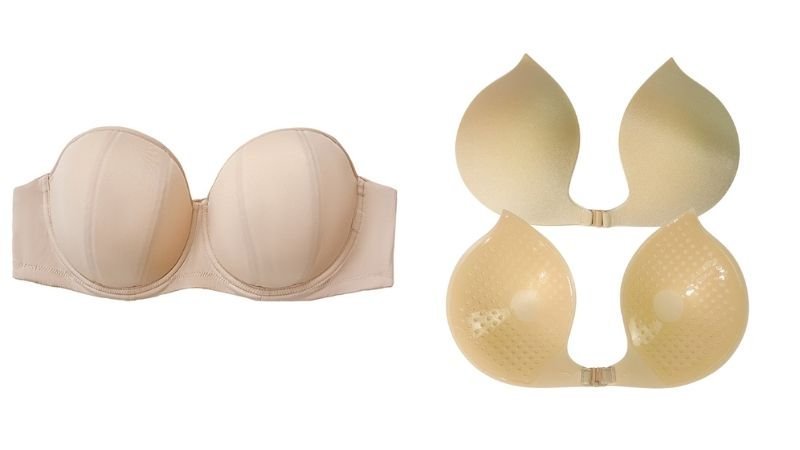
Shopping for intimate apparel for your brand lineup means weighing countless product trade-offs, and two popular categories frequently stand out: strapless bras and adhesive bras. Both help eliminate visible shoulder straps for off-the-shoulder and special-occasion outfits, yet they function very differently in terms of fit, wear experience, materials, and target customer base.
As a lingerie brand, wholesaler, or sourcing professional, choosing between these two styles is not just about consumer preference. Your sourcing decisions can directly impact inventory costs, return risks, market positioning, and sales potential.
This article compares strapless bras and adhesive bras in support, fit, garment compatibility, reusability, and sourcing considerations, helping lingerie brands make more informed product development and purchasing decisions.
What is a Strapless Bra?
A strapless bra is an undergarment designed to provide bust support without shoulder straps. It relies primarily on a secure underband and well-designed cup construction for support. Depending on the style, additional features such as underwires, side boning, molded cups, and silicone gripper strips may improve stability and lift.

Unlike standard bras, its primary support comes from the band wrapping around the ribcage rather than straps pulling from the shoulders. Many models offer detachable straps, so buyers can convert them into multi-wear pieces for everyday or special-occasion outfits.
Strapless bras are commonly made with fabrics such as nylon-spandex blends, lace, and other stretch materials. Structured styles typically follow traditional bra sizing standards with band and cup measurements (34B, 36C, and so on), while some bandeau designs use simplified sizing. This style is widely used for wedding dresses, formal evening gowns, prom wear, and everyday off-shoulder tops.
For B2B buyers, it is important to note that quality depends heavily on band elasticity, cup construction, fit, and the durability of supporting components where used. Poorly fitted or constructed strapless bras may slip down during wear, increasing the risk of customer complaints and product returns for retail brands.
What is an Adhesive Bra
An adhesive bra — also known as a stick-on bra or sticky bra — is designed to attach directly to the skin through an adhesive layer. Most conventional adhesive bras have no shoulder straps or traditional back band, and many are wireless. Their design typically prioritizes discreet coverage and direct skin adhesion rather than conventional band-based support.

Adhesive bras are commonly made with silicone or fabric-covered cups and a skin-contact adhesive layer. The adhesive formulation varies depending on the intended wear time, reusability, and product construction. Some styles feature a front closure to bring the cups together for added cleavage. Without a traditional supporting band, adhesive bras rely mainly on skin adhesion for attachment, while cup construction, adhesive placement, and front-closure design can also influence shaping and cleavage.
Adhesive bras often use simplified cup-based sizing or letter sizes such as S–XL, although the available size range varies by product design and brand. Unlike traditional bras, many styles do not use separate band measurements. They are particularly suitable for backless and low-back outfits where a conventional bra band would remain visible. Certain designs also work with deep-plunge or low-cut clothing, depending on cup shape and placement.
From a sourcing perspective, adhesive quality is a major risk factor. An unsuitable adhesive formulation may lose stickiness prematurely, cause skin discomfort, or peel away unexpectedly. These product failures can affect customer satisfaction and damage a brand’s reputation.
Strapless Bra vs. Adhesive Bra: Key Differences
This side-by-side table outlines the core distinctions to help lingerie buyers quickly evaluate fit, performance, and sourcing considerations when comparing strapless bras and adhesive bras.
| Comparison Item | Strapless Bra | Adhesive Bra |
|---|---|---|
| Core Support Mechanism | Secure underband and cup structure, with optional underwire or boning | Skin-contact adhesive for attachment, supported by cup design and positioning |
| Visibility | No shoulder straps; traditional back band may remain visible | Conventional styles have no shoulder straps or back band, making them suitable for many open-back garments |
| Sizing System | Usually traditional band and cup sizing; some bandeau styles use letter sizes | Often simplified cup-based or letter sizing, depending on the design |
| Primary Materials | Nylon-spandex, lace, molded cups, and optional structural components | Silicone or fabric-covered cups with skin-contact adhesive |
| Wear Duration | Often suitable for extended wear when properly fitted | Depends on adhesive performance, skin condition, activity, and recommended wearing duration |
| Reusability | Designed for repeated wear and washing according to care instructions | Depends on adhesive system; some reusable styles allow cleaning and partial tack recovery |
| Skin Comfort Considerations | Band pressure, friction, and fit | Adhesive compatibility, removal, and individual skin sensitivity |
| Ideal Outfit | Off-shoulder and strapless outfits where the back band can be concealed | Backless, low-back, and compatible deep-plunge outfits |
| Wholesale Cost Point | Depends on construction, materials, sizing, and production complexity | Varies with cup material, adhesive system, mold requirements, and packaging |
| Common Customer Pain Point | Slipping band if fit or construction is poor | Adhesive peeling, reduced grip, or skin discomfort |
What Lingerie Brands Should Consider Before Sourcing
Before adding strapless bras, adhesive bras, or both to your product lineup, B2B sourcing teams need to weigh several practical business factors beyond product features.

First, define your target end consumer. If your audience includes customers with fuller bust sizes looking for reliable, extended-wear support, well-constructed strapless bras will generally serve them better. If your shoppers prioritize discreet coverage for backless party dresses and formal outfits, adhesive bras can fill that need.
Second, assess return-risk factors. Both styles have different fit and performance challenges that may lead to customer complaints or returns. For strapless bras, poor fit or slipping can be an issue. For adhesive bras, potential concerns include skin discomfort, insufficient adhesion, or shorter-than-expected adhesive life. Work with your manufacturer to establish appropriate quality standards: test band elasticity, fit, and structural durability for strapless styles, and evaluate skin-contact adhesive suitability, adhesion, and reuse performance for stick-on products.
Third, think about inventory complexity. Structured strapless bras typically require multiple band-and-cup size combinations, which can expand SKU counts. Adhesive bras often use simplified sizing, potentially reducing size-related inventory complexity. However, inventory planning should still reflect actual consumer demand, product lifespan, packaging requirements, and replenishment patterns rather than assuming faster turnover.
Fourth, review marketing and product description requirements. Clear consumer expectations are essential. For adhesive bras, explain recommended wear conditions, skin-contact precautions, and realistic reuse expectations. For strapless bras, emphasize accurate sizing and appropriate fit for stable wear. Misleading descriptions can lead to customer dissatisfaction.
Finally, align your products with your brand positioning. Premium collections may invest in structured lace strapless bras and reusable silicone adhesive bras with verified skin-contact materials. Budget-focused lines may prioritize simpler constructions or selected best-selling sizes while maintaining appropriate quality and safety requirements.
Can you sell both together? Bundle opportunities
Offering both strapless bras and adhesive bras in your catalog is not necessarily an either-or decision. These products solve different wardrobe problems and may appeal to overlapping customer groups.

One potential retail strategy is product bundling. For example, a “Formal Event Bra Bundle” could include one strapless bra for off-shoulder dresses with covered backs and one adhesive bra for compatible backless outfits. Where customer demand supports it, such bundles may encourage complementary purchases while offering practical wardrobe solutions for weddings, parties, and proms.
You can also create cross-sell suggestions on product pages. When customers view a strapless bra, recommend an adhesive bra as an alternative for backless garments, and vice versa. This helps shoppers understand the differences between the two products without aggressive selling.
Keep one caveat in mind for bundling strategy: avoid combining products without considering actual demand and profitability. Calculate wholesale costs, inventory requirements, and bundle pricing carefully. Make the value of the combination clear so customers understand why purchasing both products may be useful.
Which Is Better: Strapless Bra or Adhesive Bra?
There is no universal “better” option; the right choice depends on what your end customer wants to achieve.
Choose strapless bras when stronger structural support or extended wear is a priority. Well-fitted styles can offer stable lift for a wide range of bust sizes, including fuller busts, and work well with off-shoulder and strapless clothing that conceals the back band. They are also suitable for repeated use with appropriate washing and care.
Opt for adhesive bras when minimizing visible bra construction is especially important. For backless or deep-plunge outfits where a traditional back band or cup structure would show, adhesive bras are often a practical option, alongside alternatives such as breast tape, low-back bras, or built-in garment support. Their suitability depends on the adhesive system, outfit design, bust size, and expected wearing conditions.
For your brand strategy, carrying both styles may help serve a broader range of wardrobe needs. Consumers may prefer a strapless bra for certain dresses and an adhesive bra for others. The goal is to provide products that match different styling and support requirements.
FAQ
Q1: Are adhesive bras suitable for large bust sizes?
Many conventional adhesive bras provide less structural support than well-fitted strapless bras, particularly for fuller busts. Some adhesive designs can be developed for larger cup sizes, but achieving stable attachment and lift requires careful consideration of cup construction, adhesive performance, and breast weight.
Q2: Why do strapless bras slip down?
Slipping often results from an incorrect band fit or insufficient structural stability. A loose underband, unsuitable elastic, poor cup construction, or inadequate grip may contribute to movement. Buyers should evaluate fit, band elasticity, and supporting features such as silicone gripper strips where appropriate.
Q3: Can customers reuse adhesive bras multiple times?
Yes, depending on the adhesive system and product construction. Body oils, sweat, and dust can affect adhesion, while certain washable reusable designs allow partial tack recovery after proper cleaning and air-drying. Brands should communicate realistic care instructions and reuse expectations.
Q4: Which product has higher wholesale MOQ?
MOQ varies by manufacturer, materials, mold requirements, size range, color quantities, and production setup. Standard adhesive bras using existing molds may offer more flexibility, while custom molded adhesive bras and complex strapless bra designs can both require higher development or minimum-order commitments.
Q5: Can lingerie brands customize both strapless and adhesive bras?
Yes. Depending on the manufacturer’s capabilities, strapless bras can be customized in cup structure, fabrics, underband design, sizing, and finishes, while adhesive bras may offer options for cup materials, adhesive systems, shapes, and packaging. Sampling and MOQ requirements should be confirmed separately for each design.
Conclusion
Strapless bras and adhesive bras address a similar styling need — minimizing visible bra straps — yet they perform in distinct ways. Strapless bras rely on structured construction for support, while adhesive bras prioritize discreet wear through direct skin adhesion and minimal conventional bra components.
For B2B lingerie brands and sourcing teams, understanding their construction differences, sizing requirements, performance limitations, and wholesale considerations can help guide product selection. Brands may focus on one category or offer both through complementary collections and cross-selling opportunities.
Before finalizing your next order, review your target customer profile, expected performance requirements, and brand positioning. These factors will help determine the most suitable product mix for your retail market.
Develop Strapless and Adhesive Bras for Your Brand
At Xiesheng Lingerie, we provide OEM and ODM manufacturing services for strapless bras and adhesive bras, helping lingerie brands develop products that meet their target customers’ needs. From cup construction, fabric selection and sizing to adhesive systems and private-label packaging, we support product development with a focus on fit, comfort, quality and production feasibility.
Whether you’re developing a new collection or expanding an existing product line, share your designs, target quantities and market requirements with us. Our team will help assess sampling options, MOQ, customization possibilities and production costs to find a practical manufacturing solution for your brand.