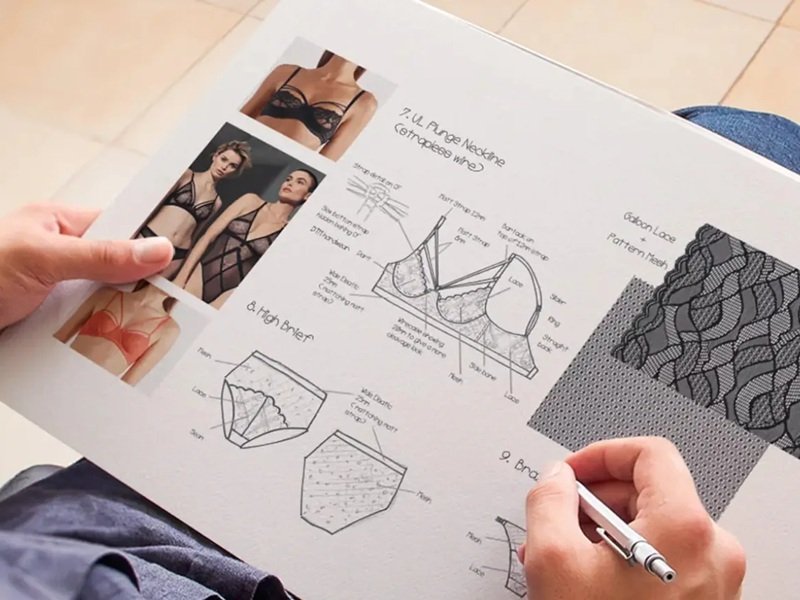
Many startup lingerie brands contact a manufacturer with a strong brand idea, a mood board, several reference images or even AI-generated designs. The vision may be clear from a branding point of view: comfortable, sensual, inclusive, premium, sustainable, or different from what already exists in the market. But from a manufacturing point of view, a brand idea is not yet a production-ready product.

For lingerie, the gap between concept and production is much wider than many new brands expect. A factory cannot build a reliable sample from “something like this, but better” unless the product direction, size range, material expectation, quantity and target price are clear enough to evaluate. This does not mean a startup brand must have everything perfect before contacting a supplier. It means the brand needs enough clarity for the factory to support the project in the right direction.
This article explains what a lingerie manufacturer can and cannot do for a startup brand. It is written from a factory perspective to help new brands understand where manufacturing support begins, where brand-side decisions are still required, and how to make the sampling process more efficient.
What a Lingerie Manufacturer Can Help With
A good lingerie manufacturer can help turn a defined product direction into a practical sample and, later, into bulk production. Once the brand has a clear product category, reference style, target customer and basic requirements, the factory can evaluate whether the design is technically workable and what needs to be adjusted before sampling.
For example, if a startup brand sends a physical sample of a wireless bra, a clear reference image of a lace set, or a basic tech pack for shapewear, the factory can review the structure and discuss production feasibility. The manufacturer can suggest whether the construction should be cut-and-sew, seamless knitted, bonded, molded, laminated or adjusted through another production method. This is where factory experience becomes valuable because a design that looks simple in a photo may require very different material, sewing or bonding decisions in real production.

A lingerie manufacturer can also help with material and accessory selection. This may include fabric type, lace quality, mesh, lining, elastic, straps, hooks, cups, wires, labels and packaging options. The supplier can explain how these choices affect comfort, cost, MOQ, lead time and production stability. For startup brands, this support is especially useful because the difference between two similar-looking materials may only become clear after fitting, washing or bulk production.
Sampling is another area where the factory plays a key role. A manufacturer can develop samples based on a tech pack, reference sample or clear product brief, then adjust details after fitting feedback. These adjustments may include cup shape, underband tension, strap length, wing height, lace placement, gusset size, bonding edge, elastic strength or sewing finish. For lingerie, the first sample is often not the final product; it is part of the development process.
A factory can also support basic production planning once the sample direction is confirmed. This includes advising on MOQ, color planning, size breakdown, production lead time, packaging method and inspection points. If the brand has clear commercial requirements, the factory can help translate them into a realistic development and production route.
However, a manufacturer is strongest when the product direction is already clear enough to evaluate, sample and produce. The factory can support development, but it cannot replace the brand’s responsibility to define the market, product promise and business goal.
What a Lingerie Manufacturer Cannot Decide for the Brand
A lingerie manufacturer can help develop the product, but it cannot decide the business direction of the brand. This is an important boundary for startup founders to understand before they start sampling.
The factory cannot decide who your target customer is. It cannot decide whether your brand should serve petite women, fuller-bust customers, postpartum mothers, bridal customers, sensual lingerie buyers, plus-size consumers, athletes or everyday comfort customers. Each market requires a different product structure, size strategy, price point and fit expectation. Without that customer definition, the factory has no clear standard for making technical decisions.

The manufacturer also cannot decide your brand positioning or retail price. A bra designed for a premium DTC brand is not developed the same way as a low-cost wholesale product. A lace lingerie set for sensual styling is not the same as a daily replenishment bra. A shapewear bodysuit sold as strong control needs different material and testing from a light smoothing bodysuit. If the brand does not define the retail positioning, the factory cannot know whether to prioritize cost, softness, support, visual effect or technical performance.
A factory cannot decide how much inventory your first order should carry. It can explain MOQ, production efficiency and cost impact, but it cannot know how many units your market can absorb. Startup brands often want many colors and sizes at low quantity, but that creates scattered inventory and higher production cost. The factory can advise on production logic, but the brand must decide whether the SKU plan matches its sales channel, cash flow and launch strategy.
The factory also cannot replace your design team, product manager, marketing team or customer-service system. It can help make a product, but it cannot validate whether customers will buy it, what ad message will convert, how your size guide should be explained on your website, or how your return policy should handle fit issues. These are brand-side decisions.
For example, if a startup says, “We want to make a premium comfortable bra,” the factory still does not know enough. Does “comfortable” mean wireless, soft molded cups, cotton lining, wide straps, seamless knitted body, light support, maternity function or no visible lines? Does “premium” mean better lace, softer elastic, more inclusive sizing, cleaner packaging or a higher retail price? These words are useful for branding, but they are not enough for production.
The factory can help develop the product, but the brand must define the market and the business direction. When that boundary is clear, the cooperation becomes much more efficient and less frustrating for both sides.
What Startup Brands Should Prepare Before Asking for Samples
Startup brands do not need a perfect tech pack before speaking with a manufacturer, but they should prepare enough information for the factory to understand the project. The more specific the starting point is, the easier it is to evaluate feasibility, cost and sample direction.
The first thing to define is the product category. Are you developing bras, panties, lingerie sets, shapewear, swimwear, nursing bras, adhesive bras, nipple covers or period underwear? Each category has a different development process. A lace bralette does not require the same technical review as a structured underwire bra. A seamless shapewear piece has different MOQ and production logic from a cut-and-sew lingerie set.

The second useful item is a reference sample or clear product image. A physical sample is usually the most helpful because the factory can check the actual structure, fabric, elasticity, sewing method, thickness and finishing. If a physical sample is not available, clear front, back, side and detail images are much better than a single mood-board image. AI images can show a style direction, but they normally do not show real construction, fit or production details. A clear tech pack or product brief helps the factory understand what should actually be sampled.
The brand should also explain the target customer and wearing scenario. Is the product for daily comfort, strong support, plus-size fit, bridalwear, sensual styling, postpartum use, sports, smoothing, shaping or special occasionwear? A product designed for a photoshoot may not work as an everyday bra. A product meant for large cup sizes needs different support logic from a small-size fashion bralette. The wearing scenario tells the factory what performance matters most.
Size range is another important decision. A startup brand should decide whether it is starting with XS–XL, S–XXL, plus sizes, cup-band sizes or a limited core-size range. For bras, size strategy affects pattern development, cup grading, material consumption and testing. For shapewear, size strategy affects compression and fit. For adhesive products, size may be simpler, but packaging and usage instructions still matter.
Color planning and quantity should also be realistic. Many startup brands want several colors at launch, but each color adds complexity to fabric sourcing, dyeing, cutting and inventory. If the first order quantity is limited, it may be better to start with fewer colors and stronger core styles. A focused launch is often easier to produce, easier to photograph and easier to sell.
Target price is often uncomfortable for new brands to discuss, but it is necessary. The factory does not need to know your full business plan, but it does need a rough target cost or retail positioning. A product built for a $25 retail price cannot be developed the same way as a product sold at $80 or $120. Without a price direction, the factory may suggest a construction that looks good but does not fit your market.
Branding and packaging requirements should also be introduced early. Logo labels, wash labels, hangtags, polybags, boxes, barcode stickers and retail packaging all affect cost and timeline. They do not need to be finalized at the first conversation, but the factory should know whether the project is plain bulk production, private label, or a fully packaged retail product.
The more specific the starting information, the fewer unnecessary sample revisions later. Clear preparation does not limit creativity; it gives the factory enough information to protect the development process.
Why Vague Ideas Often Lead to Failed Samples
Many first lingerie samples fail because the starting information is too vague. This does not always mean the brand is careless or the factory is unprofessional. Often, both sides are trying to develop a product from a reference that does not contain enough production information.
AI images are a common example. They may look beautiful, but they do not provide a real pattern, cup capacity, underband tension, strap width, fabric stretch, lining structure, back closure, sewing method or size grading. A design may show a perfect neckline and smooth fit on a virtual body, but the actual product still needs to be built with real fabric, real elastic and real human measurements.

Reference images can create similar problems if the brand does not explain what should be copied and what should only be used for inspiration. A customer may like the lace placement from one image, the cup shape from another and the color mood from a third. If those details are not separated clearly, the factory must guess which elements are essential. The result may be a sample that is technically reasonable but not what the brand imagined.
Another common issue is a mismatch between reference quality and target cost. A startup brand may send a premium brand sample but expect a very low unit price. The factory can look for more economical materials or simplify construction, but the final product will not be identical if the budget does not support the reference quality. It is better to discuss this early than to discover it after several sample rounds.
Fit expectations can also be unclear. A founder may say the bra should be supportive, but support can mean different things: wider underband, stronger elastic, higher side wing, firmer cups, underwire, inner sling, power mesh or reinforced straps. If the brand does not define what type of support matters, the factory may create a sample that supports in one way but not in the way the customer expected.
Sample feedback is another source of failure. Comments such as “not premium enough,” “not like the picture,” or “make it more comfortable” are difficult to translate into technical changes. More useful feedback would be: the cup edge gaps at the top, the underband feels too tight, the strap is too narrow, the lace is too stiff, the back wing is too low, or the gusset needs more coverage. Specific feedback helps the factory correct the pattern or material more accurately.
In lingerie development, unclear input usually creates unclear samples. A good factory can guide the process, but it cannot read the founder’s imagination. The closer the brand can bring the idea to a real product brief, the better the sample result will be.
How to Work with a Lingerie Manufacturer More Efficiently
Efficient cooperation begins before the first sample is made. For a startup brand, the best approach is not to start with a full collection. It is usually better to choose one clear product direction first, such as a daily wireless bra, lace lingerie set, smoothing bodysuit, nursing bra, adhesive bra or nipple cover product. This keeps the development budget focused and makes it easier to learn from the first sample round.
Once the product direction is chosen, prepare a reference sample or detailed product images. Mark which parts are essential and which parts can be adjusted. For example, you may want to keep the neckline, cup shape, lace style or back design, but you may be flexible on strap width, closure type or fabric composition. This helps the factory understand where to follow the reference closely and where to recommend a more practical production solution.
Before asking for a final quotation, allow the factory to do a feasibility review. In lingerie, price depends on fabric, lace, elastic, trims, construction, size range, color quantity, packaging and order volume. If those details are not confirmed, the quotation can only be rough. A technical review before quoting can prevent unrealistic expectations and reduce back-and-forth communication.

After the first sample, test it on the body and give structured feedback. For bras, do not only look at the product on a table. Check cup fit, underband tension, strap comfort, side coverage, support, shape and movement. For shapewear, check compression, rolling, gusset comfort and seam placement. For adhesive products, check adhesion, edge visibility and removal comfort. Factory development works best when feedback is based on actual wearing problems.
Once the sample direction is approved, then move into bulk details. This includes final size breakdown, color allocation, labels, packaging, testing requirements, inspection standard, delivery schedule and payment terms. Many startup brands try to discuss everything at once before the product is even confirmed. A more efficient process is to separate development into stages: product definition, feasibility review, sample, revision, approval and production planning.
Efficient cooperation starts with clear decisions from the brand and practical evaluation from the factory. When each side handles its own role, the project moves faster and the sample process becomes less confusing.
FAQ
Q1: Can a startup brand contact a lingerie manufacturer without a tech pack?
Yes, but the brand should still provide enough information for a practical review. A physical sample, clear reference images, target size range, expected quantity and target price direction can help the factory understand the project even when a full tech pack is not available. Without any product details, the factory can only give general suggestions.
For simple products, a clear product brief may be enough to start a discussion. For structured bras, shapewear, nursing bras or functional garments, a tech pack or physical reference sample will make the process much more accurate.
Q2: Can a lingerie manufacturer help design the product?
A manufacturer can support product development, suggest construction changes and recommend materials or production methods. However, the brand should still define the customer, product direction, wearing scenario and price positioning. Without those decisions, the factory does not have a clear standard for design choices.
Factory input is most useful when the brand already knows what it wants the product to achieve. The manufacturer can then help turn that goal into a workable sample.
Q3: Why does the first lingerie sample often need revision?
Lingerie is a fit-sensitive product category. Even when the design looks simple, the final result depends on fabric stretch, cup shape, elastic strength, body measurements, sewing tension and wearing comfort. The first sample often reveals issues that cannot be fully predicted from pictures.
Revisions are normal, especially for bras, shapewear, plus-size styles and new constructions. Clear feedback after fitting helps reduce the number of sample rounds.
Q4: Should a startup brand begin with custom development or existing styles?
That depends on the budget, timeline and product ambition. Existing styles or modified styles can be a practical starting point when the brand wants to test the market faster. Full custom development is more suitable when the brand has a clear product concept, enough budget and a realistic order plan.
For many startup brands, adapting an existing structure first can reduce risk. Once sales and customer feedback are clearer, the brand can invest in more customized development.
Q5: What information helps a factory give a more accurate quotation?
A factory needs the product category, reference style, material expectation, size range, color plan, quantity, packaging requirements and target quality level. The more complete the information, the more accurate the quotation can be. If many details are still unknown, the factory can only provide a rough estimate.
For lingerie, small changes in lace, elastic, cup, lining or packaging can affect cost. That is why a quotation without product details may not be reliable.
Conclusion
A lingerie manufacturer can help a startup brand move from product idea to sample and production, but the factory cannot replace the brand’s business decisions. The brand must define the target customer, product direction, price positioning, size strategy and sales plan. The manufacturer can then evaluate the structure, recommend materials, develop samples and support bulk production.
The best cooperation is not built on a vague idea handed to the factory, and it is not built on the factory guessing every missing detail from a picture. It works best when both sides understand their roles. The brand defines the market and product goal; the factory helps turn that goal into a practical product.
A startup lingerie brand does not need to have everything perfect before contacting a manufacturer, but it does need enough clarity for the manufacturer to help in the right direction. When the product category, reference style, size range, quantity and target price are clear, the sample process becomes more focused, more professional and less risky.
Turn Your Lingerie Idea into a Practical Development Brief
A lingerie manufacturer can support sampling and production more effectively when the product direction, size range, target quantity and expected price level are clear.
XieSheng can review your reference style, product category, target market and basic development requirements before sampling begins. This helps identify whether your project is ready for custom development, needs further product definition, or may be better suited to adapting an existing style first.
Send us your reference sample, product images or basic product brief to start a practical review of your lingerie project. Please contact us!